Chapter 3: A Persian Romance
In the autumn of 1919 my fiancé wanted me to come and get married at Karvin as the situation in the Caucasus was not very promising: there were rumours that the British were leaving. I went, but they were still campaigning and it was difficult to arrange anything. I stayed with some people from the Russian road company, then my fiancé was transferred to Baghdad and in December 1919 he booked transport for me. I went with a company of demobilised soldiers with a Sergeant in charge of the convoy. I had befriended a little mongrel dog, and before I went away I found a very good home for him, but he would not leave me and was always escaping his new home. On the morning of my departure he got away and found me, and to my distress he followed the lorry for miles. After a while I could not look back.
The first night we stopped in the hills at a shack without windows or doors. There was some snow and it was very cold. I had no kit with me, but the soldiers were wonderfully kind to me. They brought me supper and water for washing, gave me some blankets, and there was a sentry at my door all night. I am very grateful to them for all they did for me on the journey. The next night it was much colder as we were higher up in the mountains, and there was more snow on the road. We stopped in a place where there were some soldiers camping. I slept the night in a shack that I think had been a hospital. It had a stove which smoked horribly, and I was tired and cold and had a headache. The following night we got to Hamadan after a very difficult journey. We had to get out and push the lorry every time we went up a hill, and it seemed to be always uphill and never down. Special chains had to be tied on to the wheels of the lorries. In Hamadan I was taken to a very charming couple, Mr & Mrs Langridge. He was the manager of the Anglo Oriental Carpet Company and they had a lovely house; there I had a real bath, full of hot water – a marvellous feeling! My face was very sore from frost and wind after the journey in the hills. Mrs. Langridge gave me some cream that night, and next morning my face was much better. Mrs. Langridge was kindness itself, and I send her my grateful thanks.
The snow was blocking the roads in the mountains, so we had to hurry. We arrived in Hamadan too late to see much, but the next morning I looked out on a wonderful view. I was surrounded by snowy mountains, very impressive in the early morning light. I had a lovely night's rest in a cosy bed and woke feeling very well. I took leave of my kind host and hostess with regret. I can't remember if we stayed a night between Hamadan and Kermanshah, but when we arrived at Kermanshah we could not go any further, for the roads were snowed up. There was a military transport camp on a hill just outside the town. The officers gave me a hut with a stove to live in, and I ate with them in their mess. Earlier, my fiancé had passed the same route that I was following, and he had asked all these people to look after me when I came through, and they were all very kind to me.
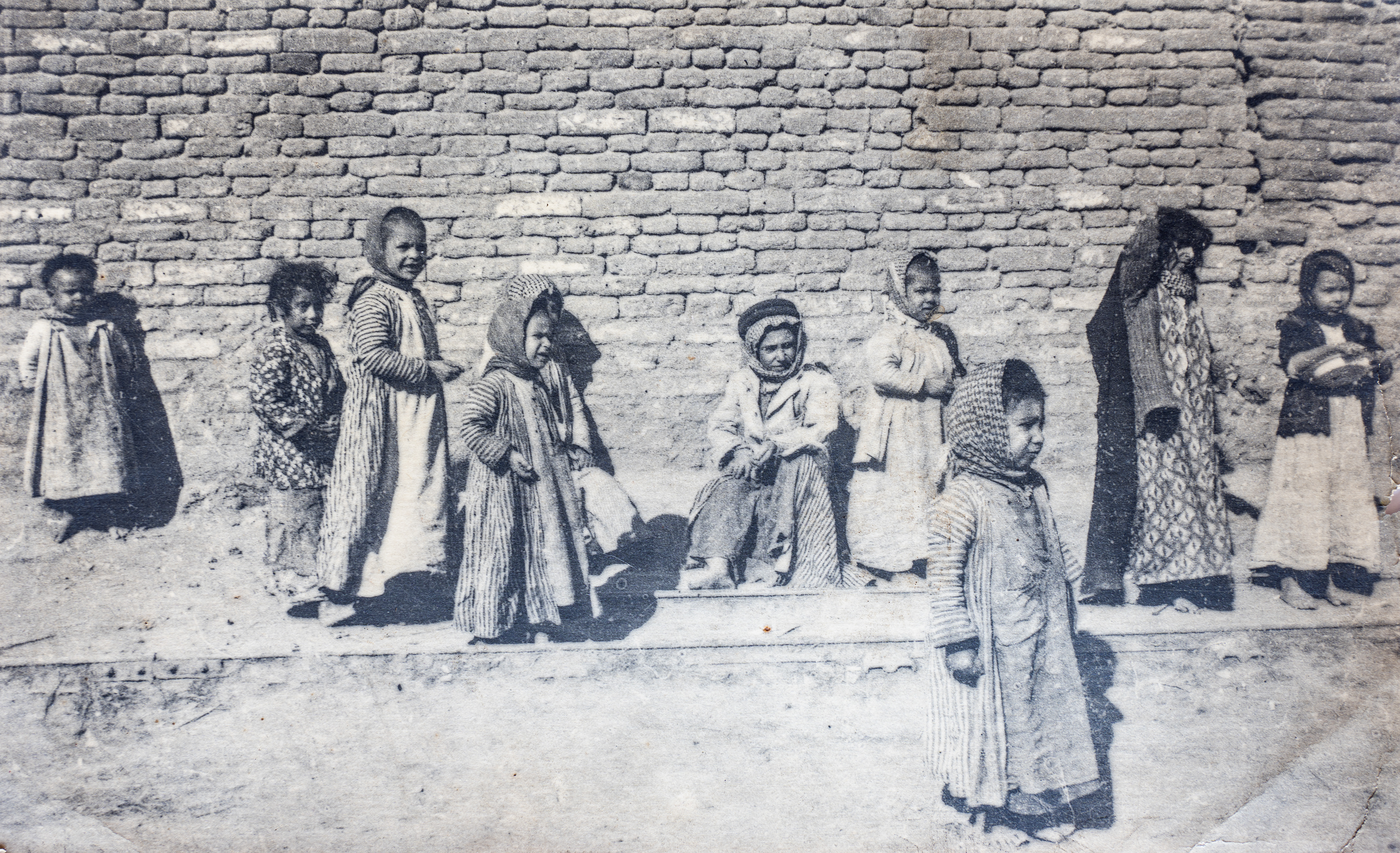
In those places you did not meet a European woman travelling in that manner every day, although I looked more like a boy. I wore men's clothes as they were more convenient and also there were no women's clothes to buy. My wardrobe was very small! In Kermanshah, we had to wait for a fortnight, and I think I was there during Christmas. Everybody was busy in the camp, and I used to go into town and wander round the bazaars, which were very interesting. There were some beautiful things in silver, copper, and bronze, also some very attractive carpets, and the people were quite amusing to watch. But I was very anxious to get on with the journey, and I am afraid I did not fully appreciate all the tobogganing excursions into the hills nor the amusing evenings, all of which the Officers arranged in their off-duty hours to try and cheer up their strange guest. The worst memory I have of that place is the smoking stove and the perpetual cold. Somehow one could not keep warm except by moving about.
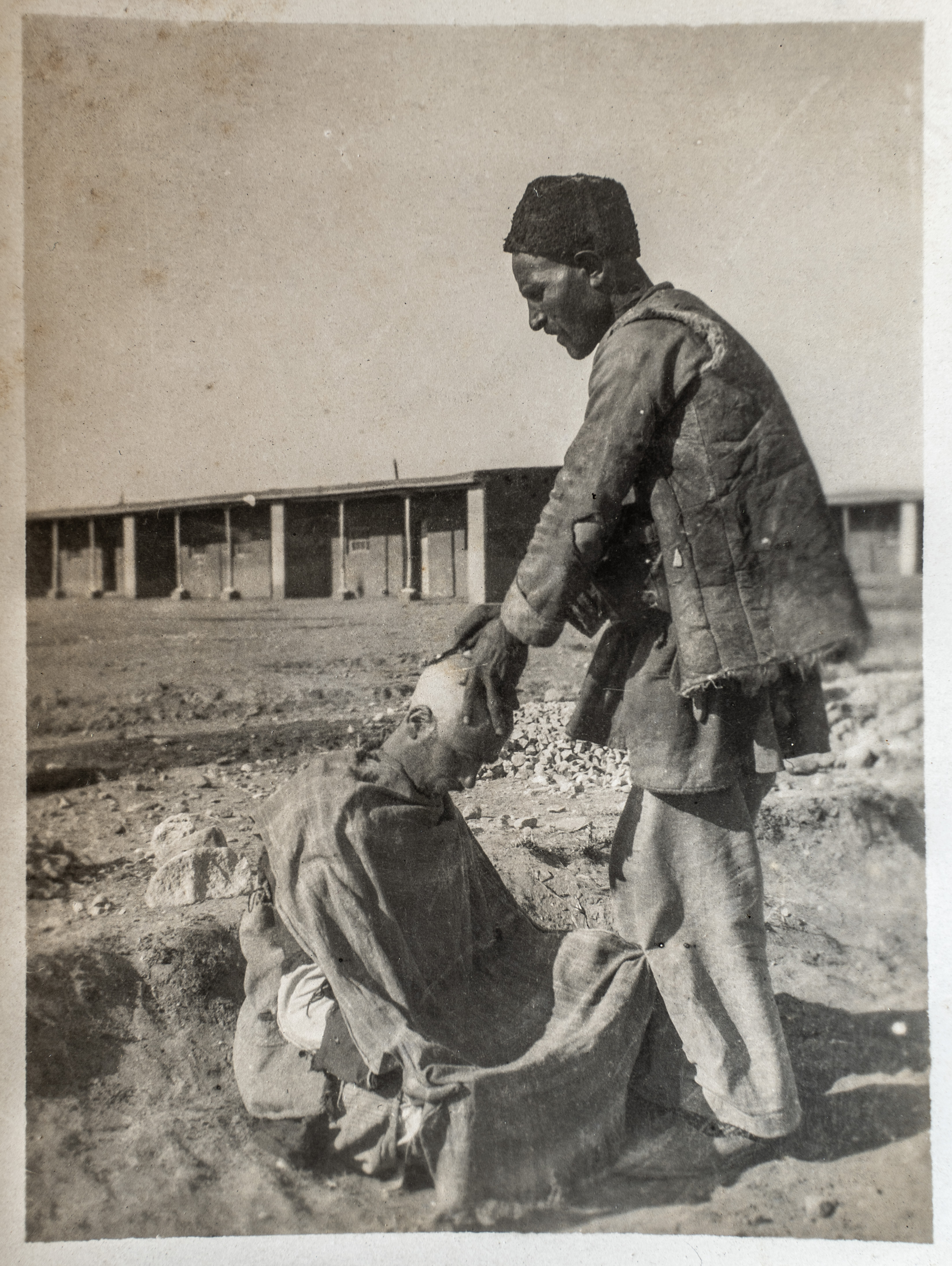
One morning the news came that we could go on; the road was clear! Hurray! We stayed that night in another military camp somewhere near the Paitak mountains, where it was warmer and not so high. The Officers were very kind to me. They gave me some Christmas cake for tea, and I had to be polite and eat it as if I enjoyed it, but I did not like it. I managed to put a piece of it into my pocket, but later on when I pulled out a handkerchief, the cake went plunk right into the middle of the floor! It was a dreadful moment for me; I wished I were dead! But they all laughed so much that I soon recovered, though my face would not stop burning for a long time. The journey after Kermanshah was more pleasant and much easier. The next day we went through the Paitak pass. If I had seen it on the first day of the journey I would have been quite excited, but by now I had got quite blasé about scenery. There was, however, a wonderful view on both sides, and the road looked quite dangerous in some places. It was such a tiny shelf on the rim of the precipice with huge rocks overhanging it that I thought we should be over the edge at any moment. We always managed to get round somehow; luckily one does not meet many vehicles on that road. The river far below looked very swift and red. Now and then we came across a tiny village surrounded by olive groves. The people were very poor; they had very few belongings: a mud hut with a mud bunk built in, a small bundle of bedding, and a couple of earthenware pots – that is all. There were some "Chaikhanas" (tea houses) along the road where native travellers could get some tea and perhaps bread but not much else. They are too dirty for us to think of getting anything from them. The soldiers fed me the whole time on the journey, and I am very grateful for their kindness.
That day we got somewhere near the railway to Baghdad from Khanaqin. It was another motor transport camp pitched in a flat valley surrounded by mountains, and I was put up again by the officers, who, as usual, were very good to me. In the morning I was told that we were not starting early because it was only a short run to the railway, so I went for a walk. I walked towards the mountains, and after about an hour the path grew steeper and steeper, and it got more and more silent; large birds swooped around and there were small caves in the rocks, and I felt a little lost there in that silence, so I turned back towards the camp. I noticed a few people down below moving towards the mountains, and when I got nearer I saw them gesticulating to me. When I reached them, they told me I had given them a fright because it was not at all safe for me to go off by myself. The hills were full of wild beasts, and they themselves never went out except in large parties.
That evening we got on the train at the railway station, and the trip was very pretty. We passed close by a lovely green saucer in the hills, which I learnt was a natural polo ground where the Persian Princess played polo with her courtiers. Her name was Shirin, and the place is called Kasr Shirin. The train was a very simple affair and went very slowly. I remember that the guard used to get down and walk along the side of it when he was tired of sitting in his van.
We reached Baghdad very early in the morning, and my fiancé was there, on a horse, waiting for me. I was installed at the Maude Hotel till my fiancé could get the special marriage licence. We were married on Friday the 23rd of January 1920 by the Chief Commissioner of Mesopotamia. On Sunday the 25th we had a marriage ceremony in a military church at Karradah conducted by the military chaplain, and we had a wonderful reception all arranged by the officers of my husband's regiment. It was the first wedding since the war, and they put all their heart into making it a good show. We had a huge three-storey cake, and when I cut it I found to my dismay it was the same Christmas Cake covered with icing and all the decorations. I determined to learn to like it even if it killed me, because it was such a wonderful effort on their part. A military band played the Russian national anthem for me; their thoughtfulness moved me to tears. It was the happiest day of my life.
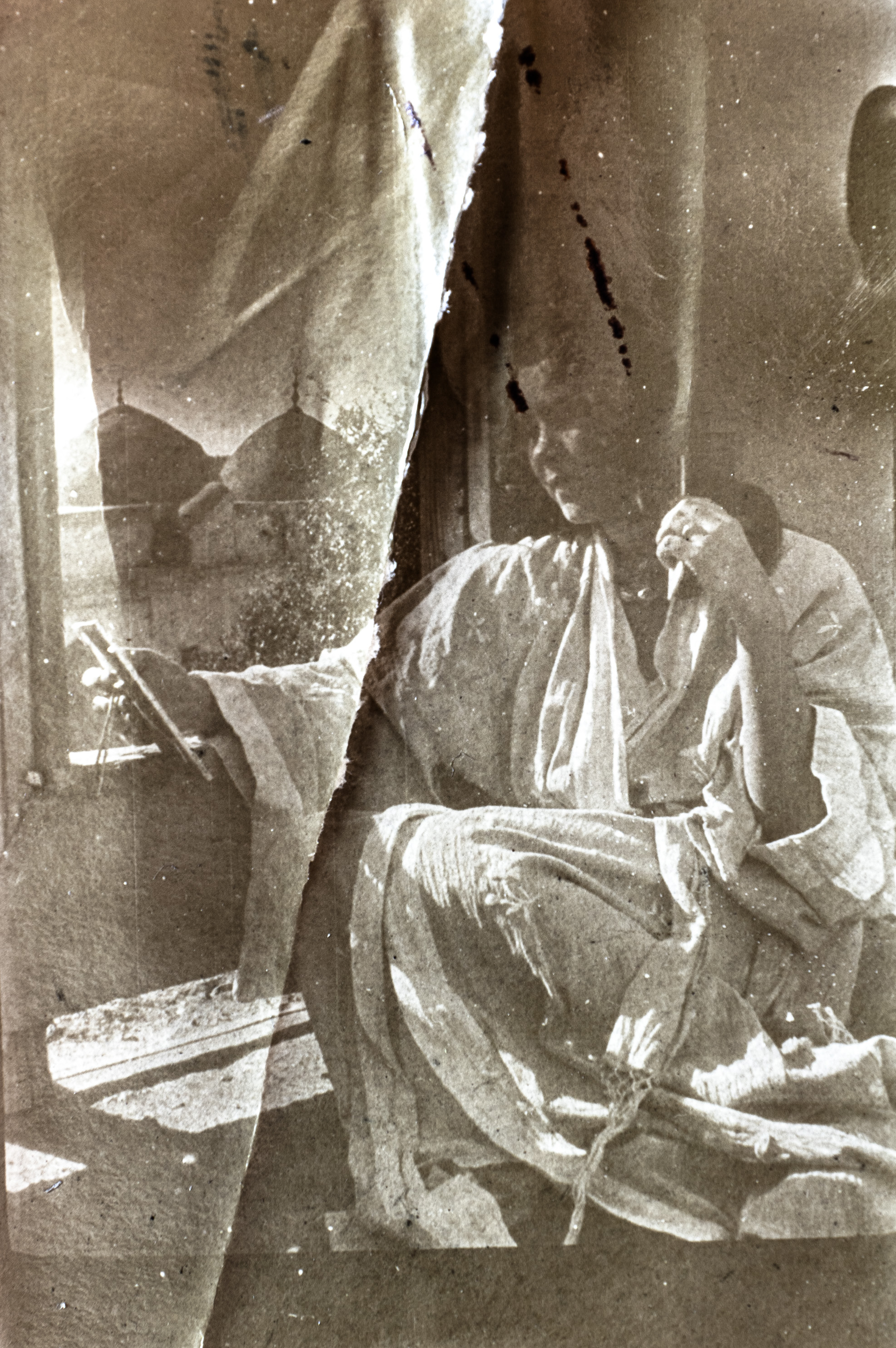
Our house was a mud hut with holes instead of windows, and at night my husband had to go out and chase away the Arab thieves when we heard them prowling around. But I loved playing at "keeping house". We got busy decorating it with all the carpets, embroidered cloths, and brass and silver that my husband had collected during his three years campaigning in Persia. One evening we were very busy hanging Persian gallens on the walls when we heard somebody playing with my husband's motorcycle. My husband rushed out to chase the rascal away and was ready for a fight when he was stopped by the voice of his Commanding Officer jokingly pleading with him to spare his miserable life. The officers' wedding gifts helped furnish our house. I had linen, cutlery, and silver; in fact, everything I could wish for. I wish them all a most happy life!
Karadah was about five miles out of Baghdad. It is on the river, and it was very interesting to watch all the queer boats going by. There were a lot of gufas, a round boat shaped like a basket and tarred to make it watertight. There were also long barges called mahailas. We explored the country outside Karadah by motorcycle and on foot. It was mostly date palm plantations. We used to go by native boat to Baghdad; the boatman would tie a rope to the boat and the other end round his waist and walk along the shore, and we progressed very quickly. The Arabs are fast walkers; we never saw one dawdling. The Persians are very slow, and it was such a contrast to see the Arabs striding along swiftly. But they were not very trustworthy in Baghdad; thieves were common.
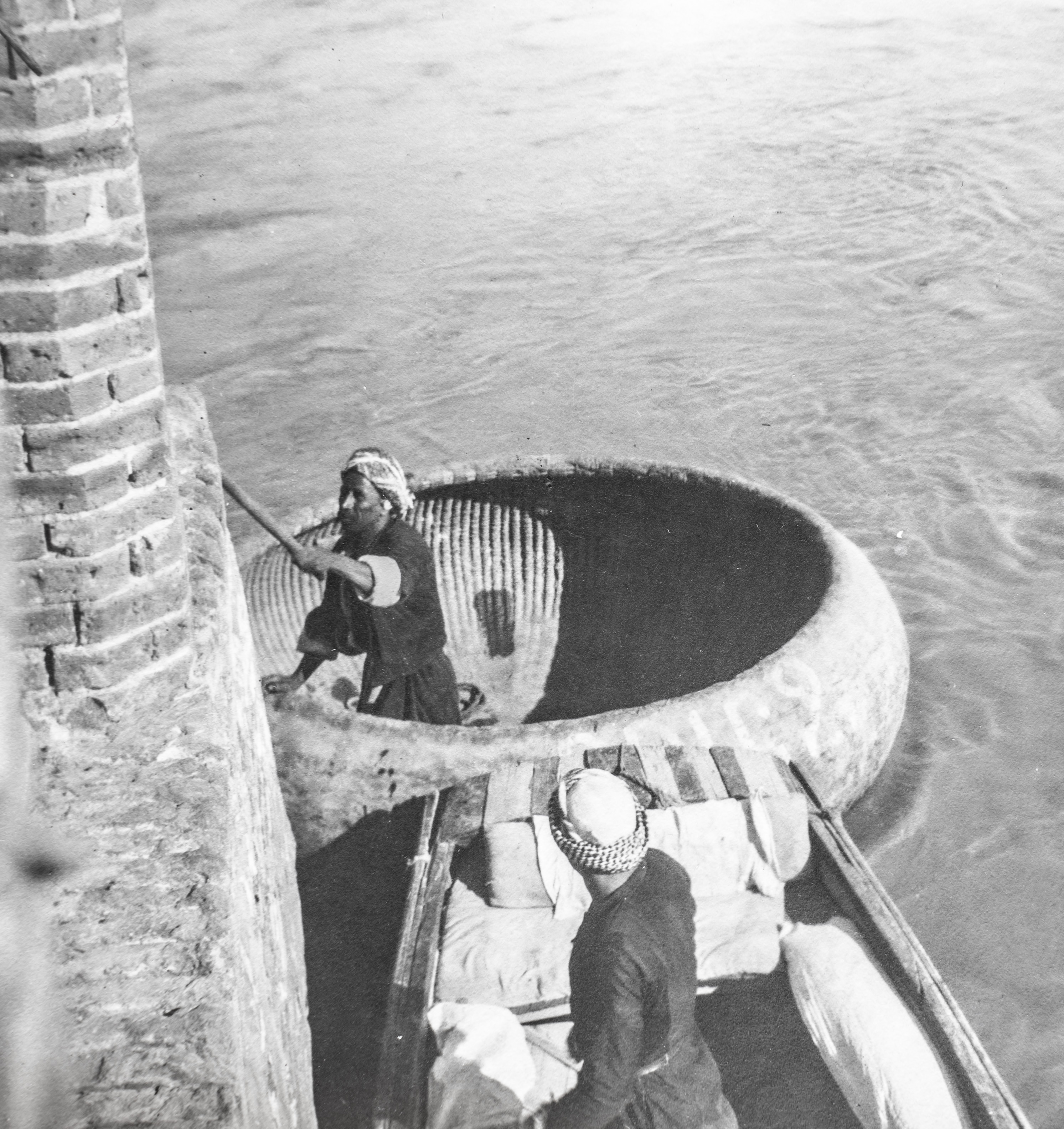
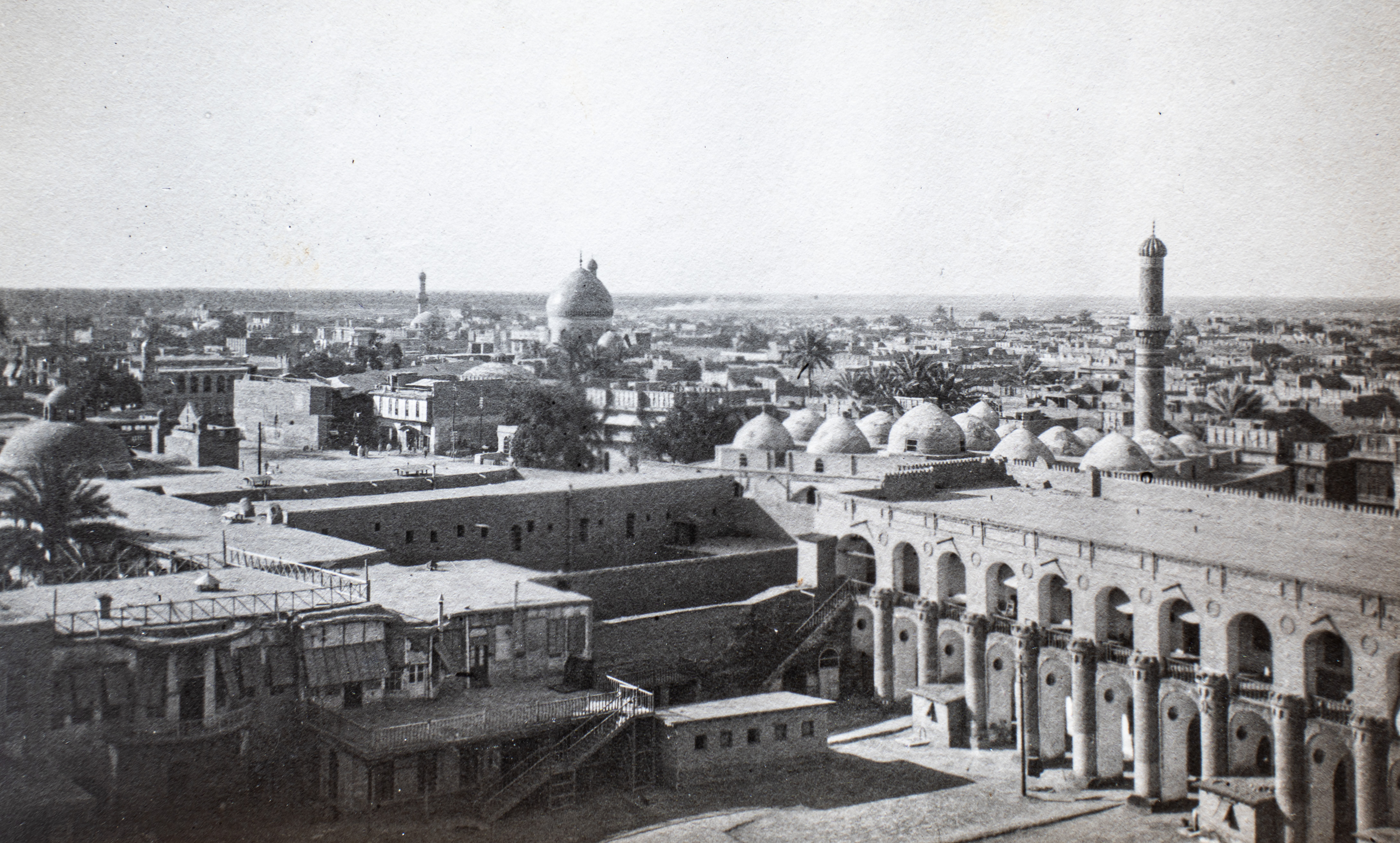
My husband was soon transferred to Baghdad as an adjutant to the Colonel in charge of the brigade. Houses were very scarce in Baghdad, and we shared one with the chief of the Military Police. It was a very pleasant house with ornately decorated ceilings and was full of sparrows' nests between the shutters and the windows. The sparrows are a great nuisance in Baghdad, coming into the rooms and behaving cheekily. All the houses had a courtyard, a big underground room, and a flat roof on which to sleep in hot weather. It was lovely to hear the muezzins calling for prayer at dawn from the top of the minarets, and when the sun rose, it lit up the mosaic and gilded domes of the mosques – a glorious sight!
I loved the four months we stayed in Baghdad. There were so many exciting things to do. I used to ride sometimes at three in the morning. There is nothing equal to a morning gallop in the desert, which begins almost outside the south gate of the city. On the left, near the river, there was a big farm managed by the British. This supplied the hospital with vegetables, milk, and butter. I used to go around the Bazaars while my husband was in the office. There were lovely silks there, and if I were there now I would not be idle but would busy myself with dressmaking; but at that time I was not very good at it. In fact, I was terribly ignorant in all domestic science. I was useless as a housekeeper, and our servants had a lovely time.
For a long time, I never went near my husband's boxes; I thought it was very indelicate to know much about his belongings. He was astonished to find out that I did not look after his things and never checked the "dhobi boy", and the result was that his wardrobe diminished considerably. We had quite a cosmopolitan staff: an English batman called Butler, an Indian bearer Mir Din, an Armenian cook, two Syrian refugee girls as maids, and an Arab boy who was servant to the Major with whom we shared the house. The Arab boy was the interpreter in this Tower of Babel. One night we came home earlier than they expected, and we interrupted them having a party. The girls were dressed in my clothes, the batman was drinking brandy and smoking one of my husband's cigars (a special brand kept to soothe the peppery Colonels, and not the two-for-a-halfpenny cheroots that he smoked every day strictly alone). The bearer was watching, as his caste did not permit him to touch anything that we used, and he did not smoke. The girls were dancing to their appreciative audience. We had a sense of humour then, so we crept quietly downstairs, went for a walk, and came back when we were expected.
The Major in the military police gave up the house to us and lived in one room, saying that he preferred to camp, as he was a bachelor. But not all his friends knew that there were other people in the house besides him.
One morning I was sleeping peacefully and a man stamped into the room and shouted, "Get up, you lazy blighter, or I will turn the mattress over on you!"
and he was just going to execute his threat when I screamed, and the poor man nearly broke his neck running down the steps to get away.
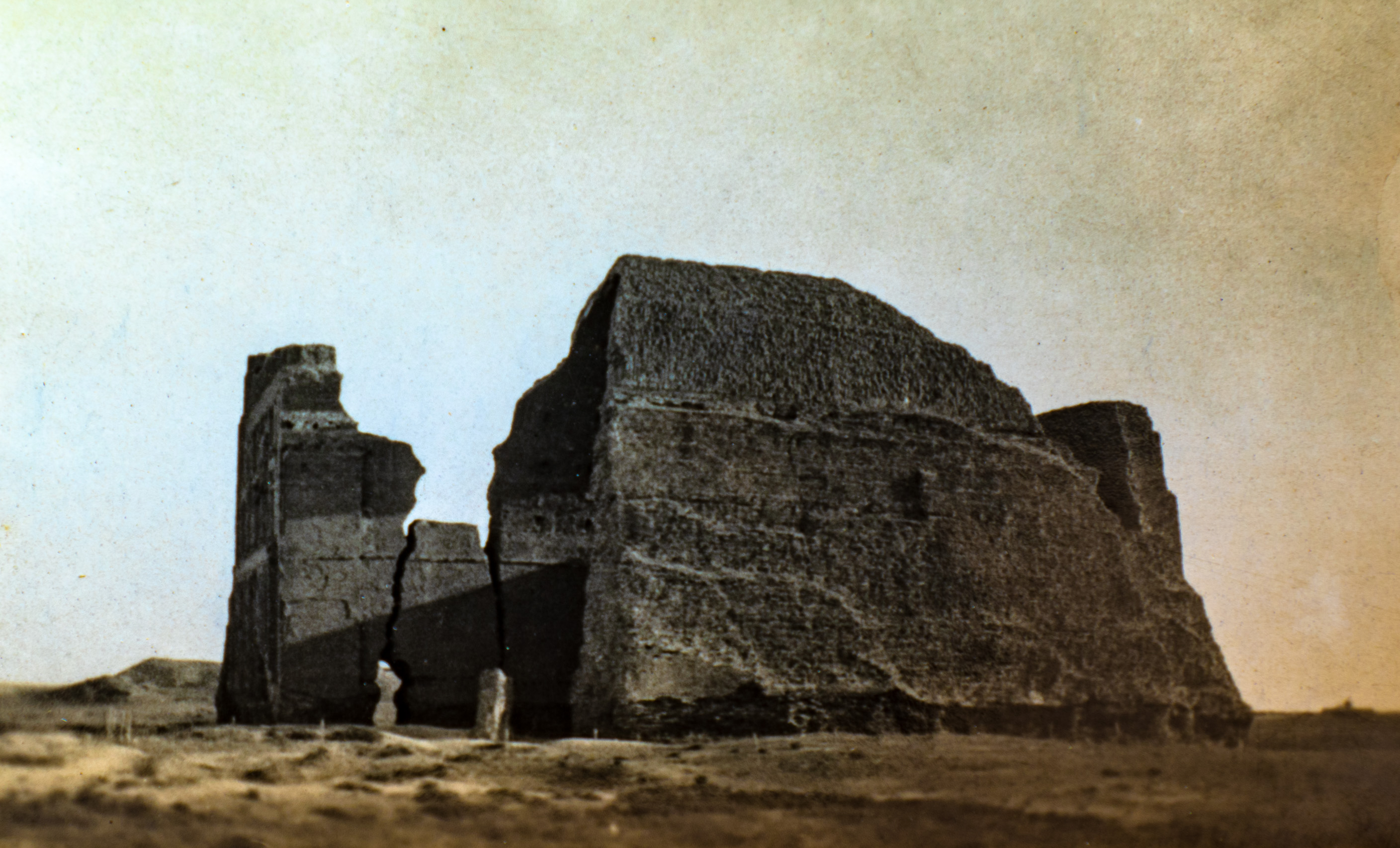
We had many friends and had picnic parties, which involved shooting gazelles from a car. I am glad to say that we never killed or even wounded one, but we chased a lot of them because you can go anywhere in a car in the desert as it is all flat. On some Sundays we would picnic at Baquba on the river Diyala, or visit the tremendous ruin of the Ctesiphon arch. There was a recent battle near the arch, and there were still many fragments of clothes and pieces of boots and twine lying about.
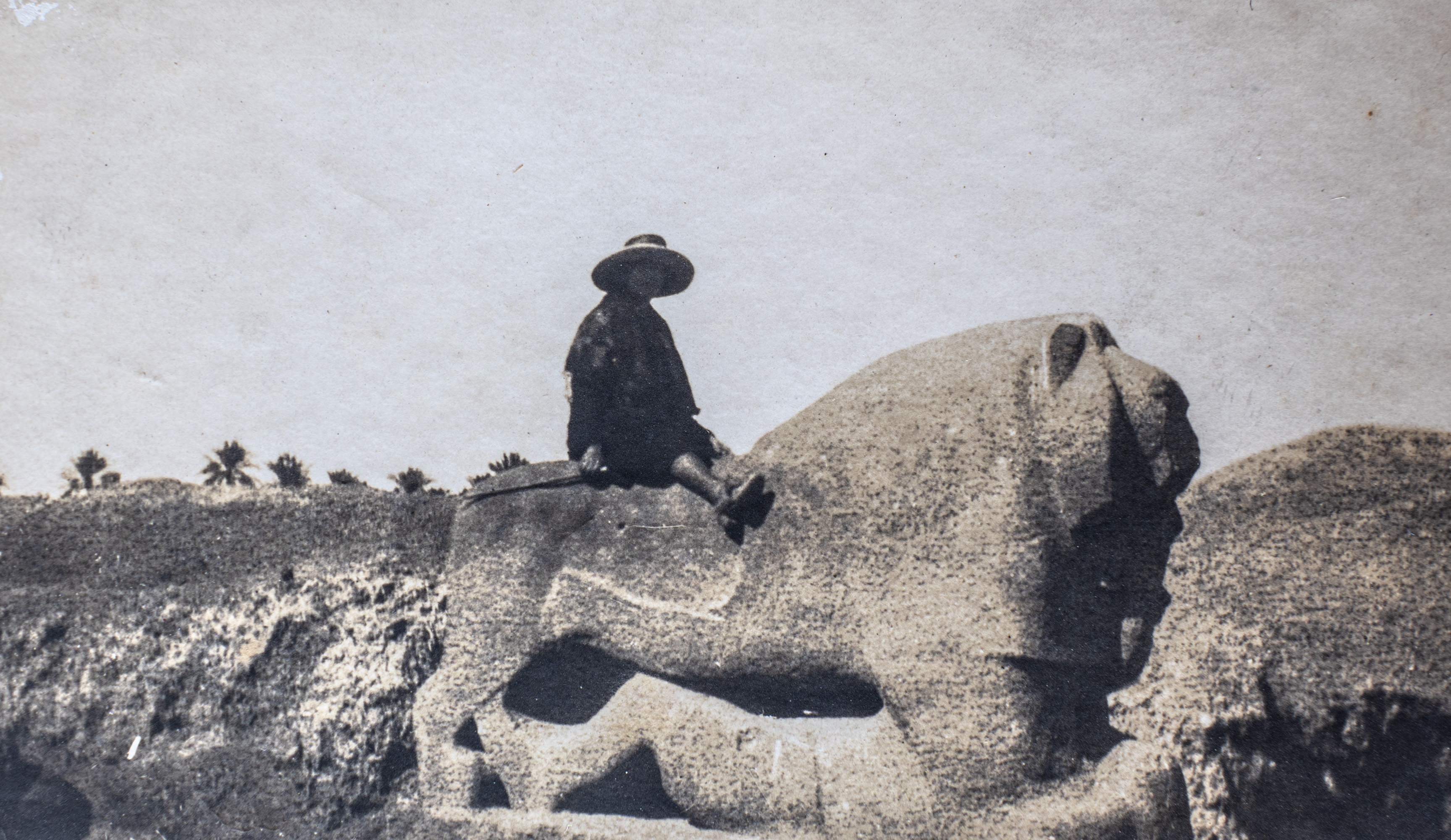
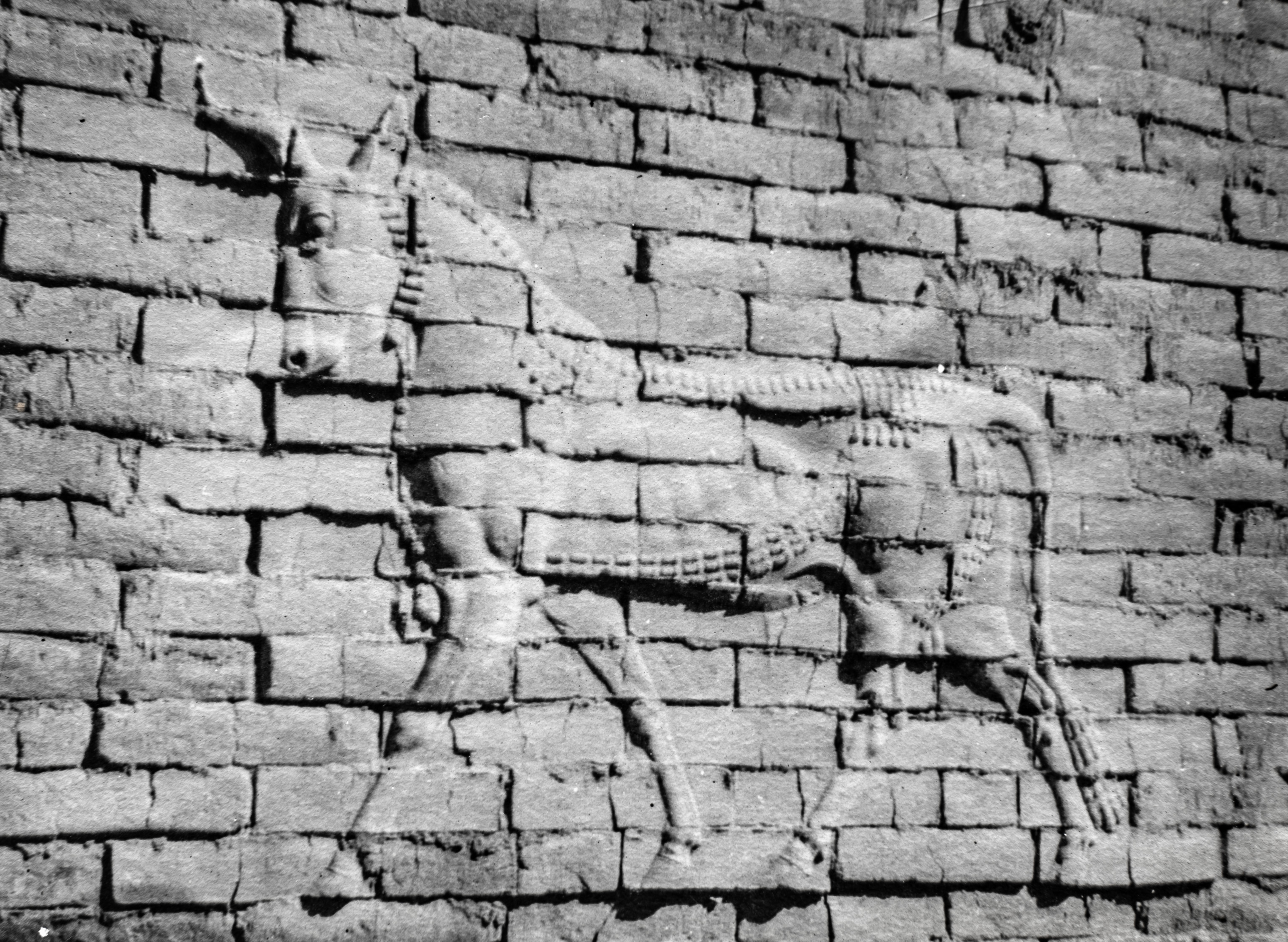
One Sunday we went to the ancient city of Babylon – a wonderful experience. The bricks in the ruins were made of baked earth and were just as good, if not better, than those that they put into the walls of our houses today. The site has several levels, the newest part being about seventy feet higher than the oldest one. On one of the walls there are some animals like giraffes with long necks, made in brick relief work. The pavements were wonderful with Nebuchadnezzar's inscription that the city would live forever. I went and sat on the monument of the lion, into which the natives had dug a hole; some practical joker had shown them a trick, pretending that he got a rupee out of its mouth, and so they went at night and tried to get some more. We saw the waters near where the Jews "sat down and wept" (Psalm 137 ), which was very peaceful. In Baghdad, we used to go to the other side of the river and watch the Arabs weaving with their hand looms. There were many walled gardens all round Baghdad, quite a distance away from anywhere, and we had to get there on our motorcycle. It was spring, and the fruit trees were in bloom; the almond blossom was exquisite. Usually, there was a man in charge who used to show us around the gardens. I recollect that time with the greatest pleasure.