Chapter 8: Life in Nigeria
We sailed at the end of November. We went ashore at Madeira and Las Palmas. The flower women in their red skirts, bright blouses, and big straw hats are very picturesque. The bullock cart men in striped trousers and little bolero jackets are very amusing, but they do look as if some soap and a lot of water would make a great change in their appearance. All the shops display embroidery and other wares on their counters and hanging in their doorways, tempting the passengers of various boats to spend their "eleventeen pounds." At Las Palmas we went into the cool courtyard of a hotel, and some of us had very good coffee and others a glass of excellent Madeira. Las Palmas is not as pretty as Madeira; the hills are very barren, but the town is quite interesting. There were good places for bathing in the sparkling blue sea on yellow sandy beaches.
At Sierra Leone we were, as usual, surrounded by a crowd of singing black boys in dangerous-looking tiny canoes. They dive like porpoises for pennies, and for threepence or more there is quite a fight under water. We threw to them anything we did not want, and it was greatly appreciated, but money is the best. They sing popular tunes and hymns all mixed up; words of one and tunes of the other, grinning all the time, and their eyes like birds watching us expectantly. John Brown is the best-known figure among the lot; he wears a stiff collar, a black top hat, and a small loin cloth. He takes his hat off for diving, but as soon as he gets back into his impossible canoe he puts it on again.
When we arrived in Nigeria we found we had been posted to Offa, which was a little over two hundred miles from Lagos by rail. When we were in Port Harcourt it was never cold - all year round it was sticky and hot. It rained five hours out of every twelve during the rainy season, and the rainy season lasted nearly twelve months. Everything used to get mouldy. But Offa was quite different, as it was 1400 feet above sea level. When we arrived at 11 pm in the middle of December it was very cold. All our clothes were in boxes in the guard's van, and we were shivering. The native foreman of works and a gang of labourers came to meet us. We couldn't access our house as the engineer whom my husband was relieving was in hospital about eighty miles away, and the house was locked up. So they collected our luggage and took us to a rest house. We had to go through our numerous boxes to find a kettle, cups, sugar, tea, and a tin of milk. The boys made a fire, boiled some water, and made a lovely cup of tea. We got some bedding out, made the beds, and retired. We did not get up early the next morning, and when we did, we found it was still very cold. I had on my winter coat until noon. Then it got hot: the Harmattan wind from the Sahara was blowing hard.
We liked Offa very much. In six weeks' time my husband's predecessor recovered and sailed for home. We moved into our house, which was on a hill about a mile from the station. The first thing I did was to go and look at myself in the mirror because there had not been one in the rest house. I was much browner and thinner than I had been six weeks before. When my husband was away on the trolley, I had to go by train with our luggage to join him at rest houses on the line. Trains left in the middle of the day when the sun was very hot. I used to go down to the station in a Roorkhee chair, which was suspended by ropes from two poles with a canvas roof to keep the sun out. Four boys used to carry me; they kept very even steps, and it was not very bumpy. I was always late for the train by the time I had given instructions about the poultry, two cats, a monkey, two parrots, an owl, crown birds, spur-winged geese, a badger, and other dependents. The hammock boys used to run all the way to the station and, as a rule, brought me there in fifteen minutes. Of course, I had to keep a handkerchief to my nose and always promised myself to send to Griffiths Macalister & Co. for a gallon of lavender water for the hammock boys.
Perhaps I ought to explain who Griffiths Macalister & Co. were: they were colonial suppliers of all things. Some folk bought from MacSymons, some from Humphreys and Crook; but for years we have bought from Griffiths Macalister & Co. I must say they are very good: nothing we have bought from them has ever been unsatisfactory. The prices are moderate, and the packing is secure. They ship everything for you, and all you do is just pay cash or sign the bill and pay according to your prosperity at 5 percent interest. They understand a coaster's mentality, and they take away many of his burdens. They will ship his car if he has one; they will buy one for him if not, and get it licensed, insured, and overhauled if necessary. Some bachelors who are too busy on leave and can't be bothered to find a girl to marry write to Griffiths Macalister & Co., and they supply the bride, complete with her outfit for the coast and guaranteed for twelve months, which covers all small repairs including appendicitis and permanent waving.
The shooting at Offa was good, and a lot of people came and spent local leave with us. Bush fowl was plentiful; they taste very good, and I prefer them to any Nigerian bird. We had many lovely walks with a gun. There was a tennis court in the compound, and people often came for the weekend and played tennis. I had a garden by the reservoir, halfway between the house and the station. Also an orchard with avocado pears, grapefruit, oranges, lemons, cherries, and, of course, mangoes. The latter are a nuisance as they attract flies in the daytime and fruit bats at night.
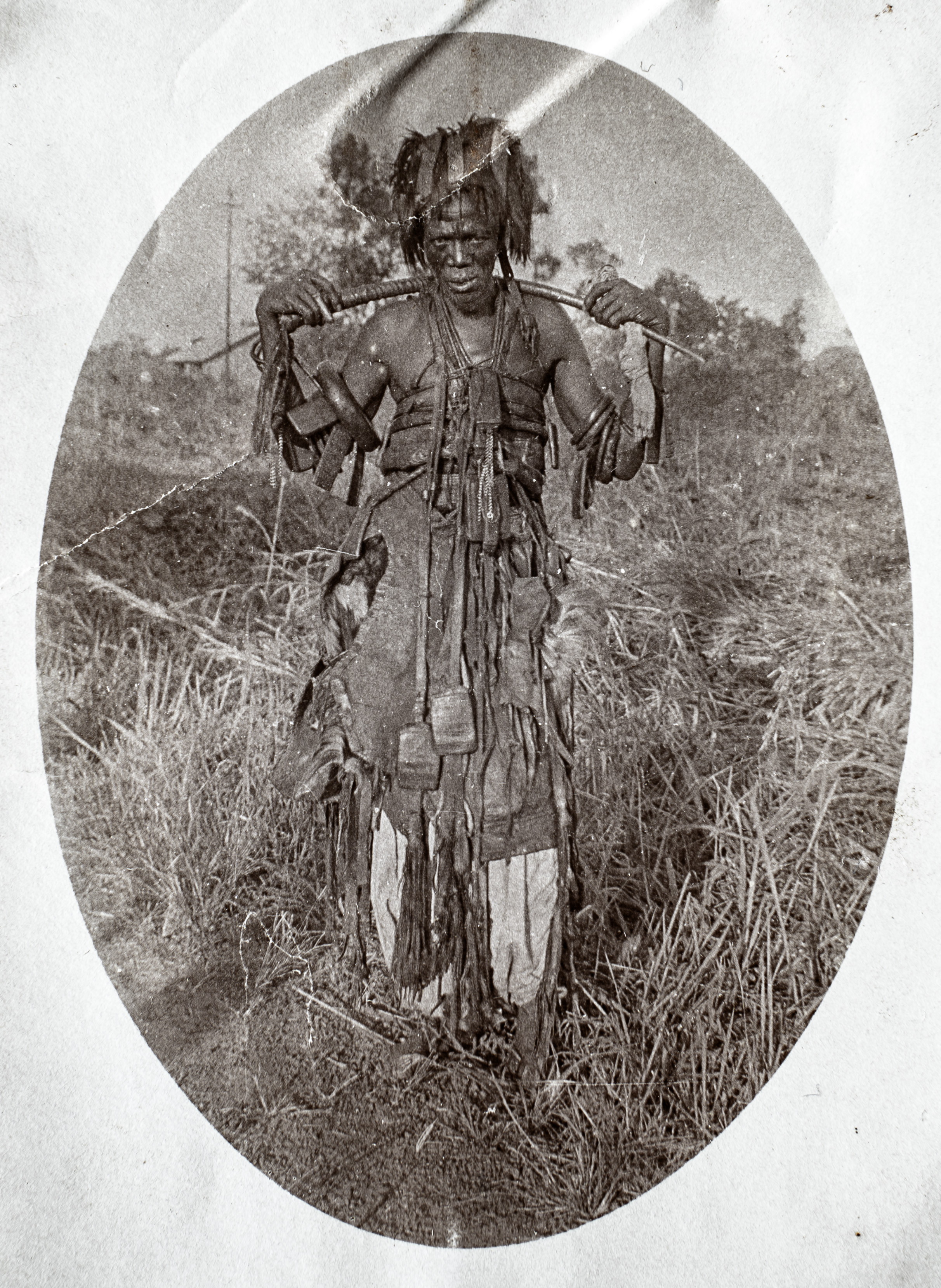
We went often on line, and without a coach, it was very difficult. We had to stay in tiny, one-room rest houses that were terribly hot. There was no furniture except a table, so we had to carry everything. My husband's section went from Ibadan to Lanwa and was about one hundred and fifty miles long. At Ibadan we had a wooden rest house which was quite good. We stayed one night every month when we went up with the pay train. Ibadan is the biggest native town in Africa, I am told. It is too big, and there is no proper water supply or electric light. It is very dirty, as it is impossible to keep all those miles of streets and shacks clean and sanitary. Goats, children, and chickens all scratch in refuse heaps. The central daily market is enormous, and as well as foodstuffs, they sell very queer things: monkey's skulls, jaws and tails, rats' skeletons, all sorts of roots and animals, and mysterious balls of dirt. These are for Ju ju medicines. We once went to see a sacred crocodile in the middle of the town. The poor beast is kept in a mud enclosure just big enough for him to turn around. If any visitors come, the natives swarm around offering chickens for sale. The visitor buys a chicken and throws it alive to the reptile. The crocodile looked asleep, but when someone threw the chicken, it was as quick as lightning – a horrible sight.
There is a huge town hall where the chief comes for ceremonial festivities. His face is always covered, following a family tradition, and no one has ever seen him. I think it is a good tradition, and it would be well if it were adopted all over the country. From the roof of the town hall, you see a tremendous expanse of corrugated iron roofs in all directions. What the town lives on, I don't know. It cannot be on each other's washing because there is very little evidence of washing. Regardless, they all look well fed and happy. The surrounding country is very fertile, and much cocoa and kola are grown, but not primarily for commercial purposes.
The Forestry Department headquarters is at Ibadan; the experimental plantations, mostly of teak, stretch for miles and are very fine. I like walking in teak plantations; it is never quiet. The huge leaves are always dropping and making a clatter. There are a lot of Europeans at Ibadan, living in reservations scattered all around. The railway people live near the station. A little further along the road is a European hospital; further on, there are some houses belonging to trading firms' agents. But the Public Works Department, the military, the Forestry, Agricultural, and Education departments are all scattered far apart from each other by as much as ten miles. The roads are quite good, and most people have cars. One can have a taxi if one is very brave – it is dangerous in every way, visible and invisible.
There is a very high percentage of motor accidents around Ibadan. The native drivers have very little road sense, and now they are getting high-speed lorries which they can't control properly even when the lorries are in good condition. Any native-driven motor vehicle quickly gets dangerously decrepit, and the drivers don't know when it is dangerous. As long as it runs, they drive the lorry as fast as it will go, and when the steering jams or the brakes don't work and they run into something, they merely say "Ah! Ah!" if they are alive. The police are very busy with the motor transport problem, and there is a scheme on foot that will tighten things up a little, and the old wrecks will be scrapped.
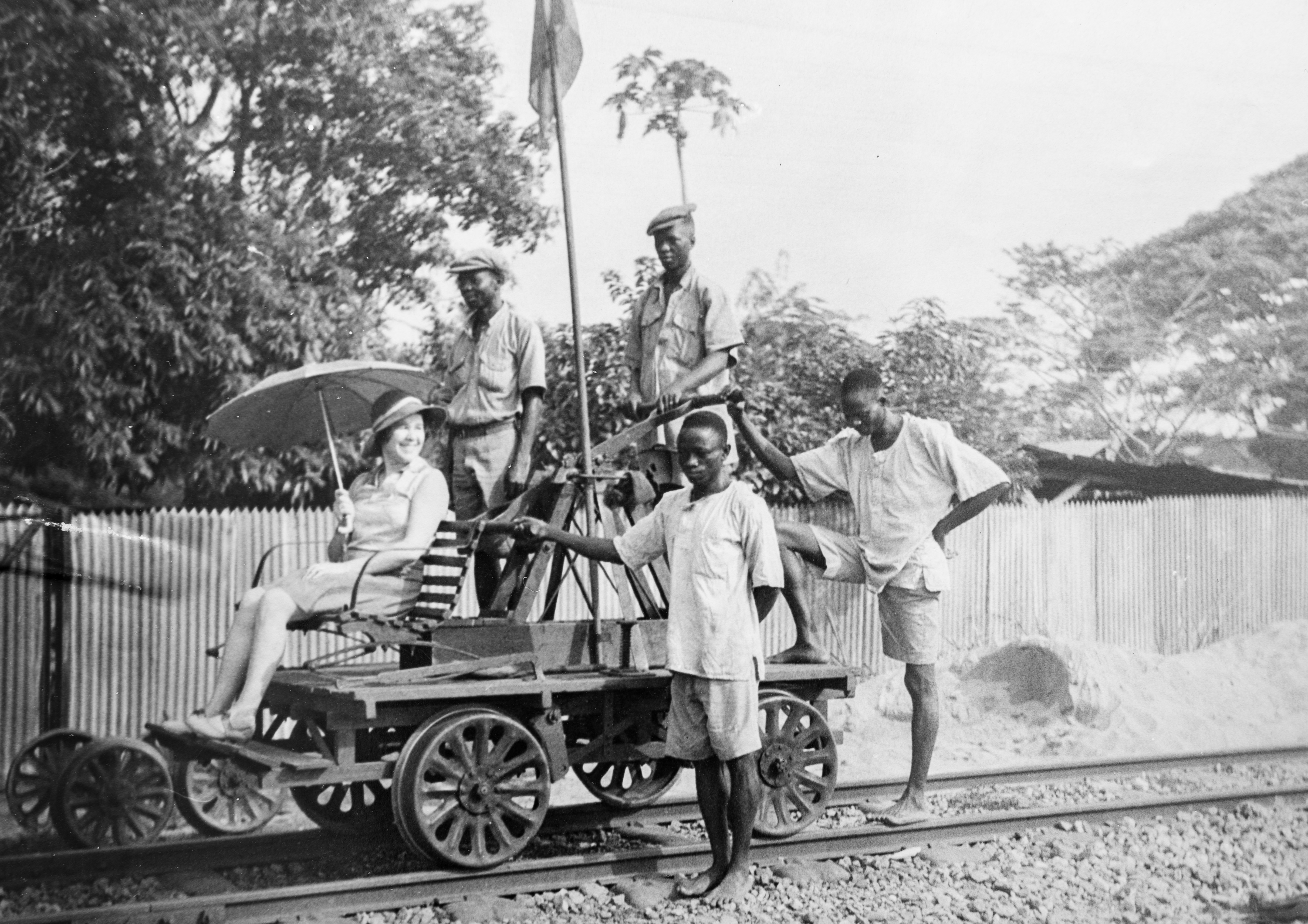
The next place where we used to stay was Iwo. There was a village nearby which I have not seen, though at night we heard it. We stayed in a one-room concrete rest house with a pan roof, and every month I was cooked there while my husband was on the trolley looking after the two strings of rail which were opening up the country. Along the line, there are the graves and cemeteries of many men who laid the railway. There is a cemetery at Offa, in the bush about two or three miles from the station. My husband's predecessor showed it to us, and my husband had the grass cut several times a year. A year later, when we went to visit, we found that somebody had unscrewed all the brass nameplates from the graves and taken them away. No one could tell who rested there. Brass is very tempting to the natives, and they have no sentiment about graves, so you can't blame them. Most of the bush villagers bury their dead under the mud floor of their huts.
Sometimes we stayed at Ede, a big town near Osogbo. My husband had to do some surveying there. We lived in a lovely, cool political rest house with mud walls and a grass roof. The kitchen was a little mud hut with two stones on the floor for the fire, and that was all. We had our own camp tables and chairs; the view was very fine, and the town was reasonably clean.
Osogbo was further along the line. There was a lot of work there for my husband as they were renewing the line with heavier material. There we had no rest house or coach (except occasionally on the pay train). However, a relaying engineer was living there, and when he was away, we borrowed his rest house. It was made of corrugated iron and expanded metal and was very hot. It consisted of two rooms, a small verandah, a pantry, and a bathroom (the bath we always carried with us). When we stayed there the first time, we were woken up at about four o'clock in the morning by a terrific clamour of crowing cockerels. My husband jumped out of bed and went to investigate with the torch. The floor of the rest house was raised up about three feet from the ground, and we found a big basket of cockerels right under our beds. All our boys and the watchman were asleep in one of the huts, so he took the basket and put it in the hut and waited. When the cockerels started crowing again, the boys jumped up and ran around before they realised what it was. We found out afterwards that the night watchman put them there every night for safety before he went to sleep.
He said, "The other master sleeps plenty; he no hear them."
All I can say is that the other master must have had a clear conscience!
Sometimes the doctor put us up, as he had a kind heart and a spare bedroom. He was very good to us. At other times, we stayed in a political rest house. There was a European there who was very good at spinning marvellous fabrications; he was really an artist. Once he was passing our rest house just as I was going out to play tennis. He started talking, and I could not get away – there was no pause in his flow. I knew he wanted to be offered a drink, but I did not want to miss my game of tennis. We only had two hours in which to play games. Before five pm, it is too hot, and by seven, it is dark.
In the end, when he saw that I was going to be strong-minded, he said, "I had very bad news today, a wire that my mother is dead."
I felt dreadful and said, "I am terribly sorry; do come in and have a drink."
I did all I could to make things easier for him. He had a couple of drinks; then my husband came home, and I left them together. My husband did not look very kindly at me, so I told him, and he softened and forgot his tiredness after being all day in the sun. When I came back, he was still there, so we had him to dinner, and finally, he went home about midnight.
Some months later, we were staying at the same rest house, and he came to show us some photos. He showed us some snaps of his mother and his fiancée (The fiancée was a magnificent singer and well known all over the world, but we were so ignorant that we had never heard of her).
I thought they were both riding on donkeys at Blackpool, judging by the background of the pictures, but he said, "They had such a lovely time this summer at Biarritz. They want me to go there with them when I go on leave."
He had forgotten that he had celebrated his mother's funeral at this same rest house in the early spring! Afterwards, we found out that he told some lies that were not as harmless. He was retrenched on that tour. But he was the master of his art!
Osogbo has quite a big native town, but like all native towns in Nigeria, it is not very inviting. One can't wander about with pleasure in the bazaars as we did in Persia and Mesopotamia. I believe at Kano, in the far north on the edge of the Sahara, the market is quite interesting, but dirty, and the flies are very trying. We have not been there yet. There was a District Officer's house about a mile away from the station. One night when we were dining there, he produced new potatoes. I asked him where he had got them because it is not considered possible to grow them in southern Nigeria and nobody tries. He said that he had a case from the cold storage company. Some of them had gone bad, and the boys had thrown them into the garden and covered them up with some soil, and a lovely crop of potatoes had been the result. When we went to Offa, I planted some potatoes, and we had a good crop. I then experimented with many different vegetables. We had a good crop of peas and watermelons from seed which I had saved from melons on the voyage out. We also had a very good crop of runner beans.
When we were staying with the doctor at Osogbo, I boasted that I would get a prize anywhere in Nigeria for my beans. He said he would bet anything that his beans were larger than mine, and I took on the bet. I knew what sort of a gardener he was – one of those who pulls things up every day to see how much they had grown. When we were assembled at the dinner table (quite a lot of us were there), our host announced that there was a bet on whose beans were the longest, mine or his. He told the boy to bring mine on a dish. Everybody was astonished to see such beautiful, long, straight beans; they would not have been out of place at any show in England; in Nigeria, they seemed almost like a miracle.
Then our host said to another boy, "Now bring mine".
The boy went out and came back with a huge dish on which were lying six beans half a yard long and all beautifully straight. They were the pods of the flamboyant trees!
Once there was a derailment about thirty miles from Offa. The telegram arrived in the evening, just as we were going to have dinner. I packed up the luggage and dinner and went to the station. When we got there, we found that we had been put in a van which had carried "stock fish"; it smelt horribly. The breakdown train was ready to go, so there was nothing to be done. We had to eat our dinner there and afterwards live in it for three days. All our things smelled for the rest of our tour, and I could not get the smell out of my hair for a long time. Cats and dogs followed me about for days!
The other end of the section was in Ilorin, to the north, thirty miles from Offa. There were perhaps twenty Europeans there who had tried to play polo. The native ponies were not easy to train, and they have no stamina. The Bishop of Northern Nigeria lives there. He has been many years in Nigeria, and his wife came out over forty years ago. They are very interesting people. When the Bishop's wife first came out, the boat had no accommodation for female passengers; she had to sleep in a cabin with the stewardesses. Up until quite recently, European women in Nigeria were very rare.
Thirty miles beyond Ilorin was Lanwa, where there was a little rest house in which we used to stay once a month when we went up on the pay train. We had to remove everything out of the coach quickly because the engineer from the next section was ready to swap with us. I remember once we arrived there on Saturday, and there was no train back till Monday, and I had forgotten to bring anything to read from Offa. My husband told me that I was the last person who should come out to this country. I icily agreed and said that I should never repeat such folly but should have had more sense and stayed at home with Helen. While we were exchanging pleasantries, a passenger train came up with a messenger who had brought my husband some office work. In the box, there was a copy of the Weekly Times. We cheered up considerably and read every line of that paper, from the date on the top of the front page to the bottom line of the last page. It was a Godsend.
The country was orchard bush, and we used to go for long walks. There were some wonderful anthills there. Some of them were like miniature cathedrals in the Gothic style. Once we saw some ants carrying a baby rat that had got out of its nest. It is very interesting studying ants and other insects in Nigeria because there are so many varieties. There is one beetle that digs in dry sand, kicking out pebbles and stones until it has made a funnel-like shape. When any insect crosses the hole, it slides down the dry, slippery sand, and so the beetle gets its dinner.
There is one species of black ants that go out on raiding parties. The big, long soldiers are at the front and the sides and a few at the tail end to see that none lags behind. In the middle are shorter, fat ants. The soldiers have very powerful pincers, and one of them once cut through the tip of my husband's finger as if with a pair of scissors. They fizz like soda water if you disturb them. I blow on them when I meet them, and they fizz. They are very brave: once we put a burning match in their path, thinking that they would go around. The main body went around, but the soldiers near the match didn't leave their post and held station and got burned. We never saw them raiding, but we have seen them coming back. They were carrying other ants' eggs, the smaller ones staggering under their heavy loads right at the tail end. We tried to take some of the eggs away, but the ant that was carrying one would run around and around until it found its load and then would go on again.
There are red ants that build their nests in the leaves of trees, chiefly mango trees. They select a bunch of leaves and then use a grub that produces a sticky gum. They carry the grub backwards and forwards, sewing the leaves together until a nice, cosy nest has been fashioned. They have powerful jaws, as I have experienced to my cost when they have fallen down my neck while walking under a tree. There is another kind of ant that collects grass stalks and seeds in its nest. We sometimes tried to help them by carrying their raw materials: we put the same kind of grass seeds around their holes. They just stumbled over them, never attempting to take our seeds in, carrying on as before our assistance. They must do what the sergeant major tells them. Once in Port Harcourt, we went out to a dinner party, and afterwards, we went on to the club to dance. Somebody offered us a lift. We two wives were in the back seats and our husbands in the front, and soon after we started, we were attacked by driver ants that had got into the car while we were having dinner. We started to scream, telling the men to stop, but they thought we were just in high spirits after a good dinner and the prospect of a dance. On they went faster, thinking girls will be girls, while we were being eaten alive. When we got to the club, we bolted for the dressing room, undressed, and picked and shook off the instruments of our torture.
Walking along paths, one sees small round holes, with the surrounding area very clean and flat. I often wondered what they were, and the other day I was enlightened. You put a blade of grass in the hole and jerked it out as if you were fishing. If you were lucky, on the end of the grass, just like a fish on a hook, would be a bright yellow worm with a black head. The boys say their feet get bitten if they stand over these little holes, and certainly these little worms have a lot of teeth on their black heads.
There are many beautifully coloured moths and butterflies. On our first tour, we used to collect them and frame them for Helen. But I hate to kill things, especially those whose life is so short and who are hunted by so many creatures. The last insect that I put into the killing jar was a big beetle, and it kicked on its back for a long time before it went to sleep. I have not done any collecting since then. There is a moth that sips nectar from flowers just like a hummingbird. It darts about very quickly and does not alight on the petals but flutters its wings very fast, keeping airborne.
Of course, there are a lot of mosquitoes, but I am purposely keeping myself in ignorance about them. If I started to study them, I should never have any peace, as I would be inspecting each one to see if they were carriers of yellow fever. A certain young man went home and was asked if there were many Scottish men in Nigeria.
He said, "Yes, quite a lot, but mosquitoes are worse!"
Cicadas are very noisy. I was told that they stay underground for seventeen years before they come to life. It seems a lot of trouble; no wonder they make so much noise when they emerge. Nigerian bees are very bad-tempered; once we were walking along a bush path that brought us to a fair-sized stream over which a fallen tree trunk served as a bridge. It was difficult for me because I don't like heights. My husband had walked over it like a cat and was waiting for me at the other end. I was crawling over it when he shouted to me to run – and did so himself. I could not turn back, and at the end of the bridge, I ran after him, wondering what monster was pursuing us. I soon found out! Thousands of bees were rising from the grass all around and were taking the same direction as ourselves. We were stung quite badly, and for the next two or three days, we looked very chubby.
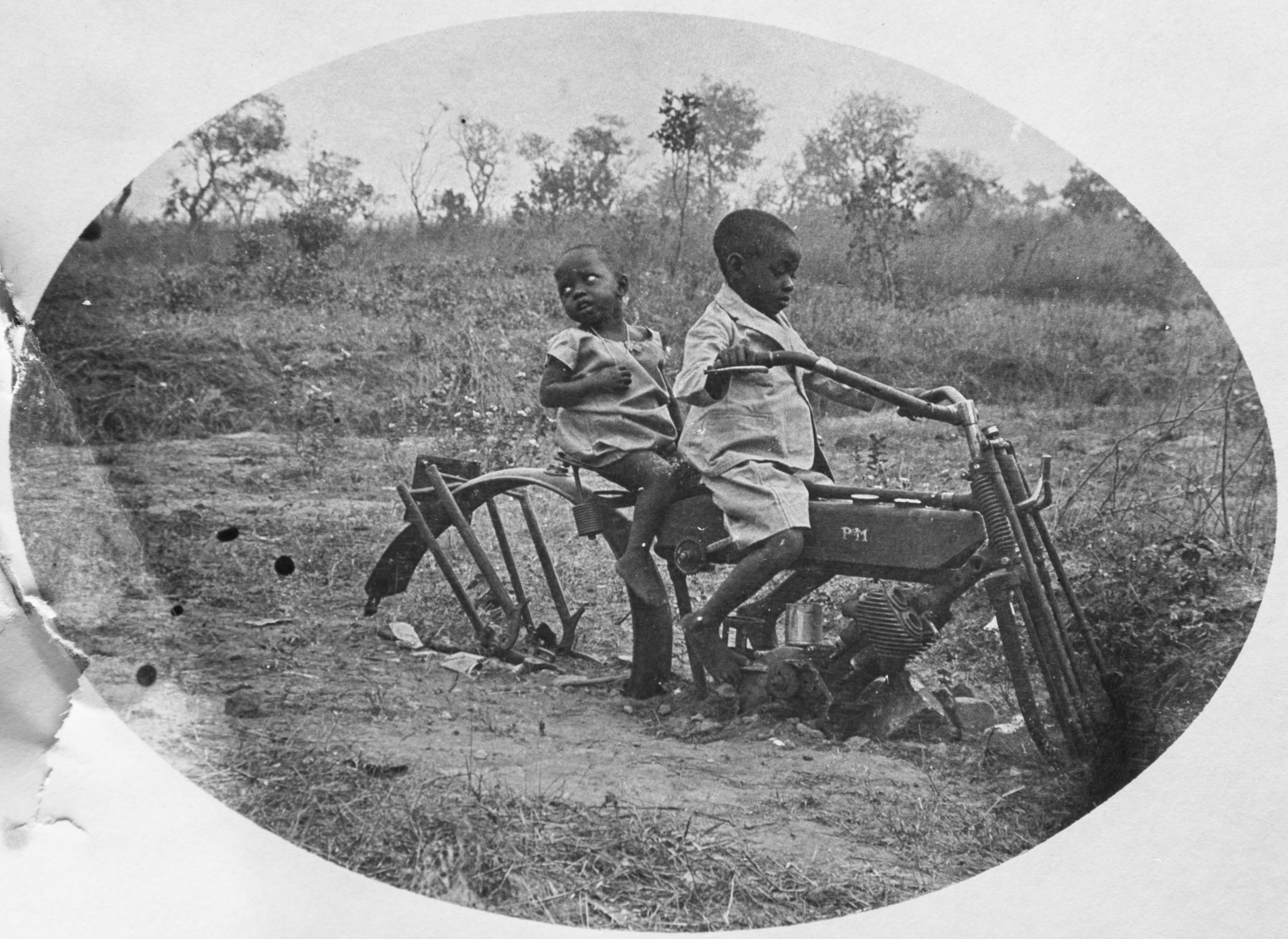
I did a lot of walking when we were on line. My husband goes on the trolley for his inspection, and I go for a walk at six o'clock in the morning. It is lovely then when the world is waking up, cool and refreshed. All the birds are in a great hurry to get their breakfasts. I meet animals sometimes. Once I mistook a crowd of big baboons for natives picking firewood. They were big, and I only saw their backs in the tall grass and bushes. Then the male leader stood up and gave me a snarl. I was very polite and did not trespass but turned around and went back with as much dignity as my fright would permit me.
One morning, about three miles away from Minna, I met a very strange animal. It was a dirty brown and had a strange and peculiar shape. Its front part was very broad and powerful, but the hindquarters were very narrow. Afterwards, my husband said it was a hyena. Some birds make most weird, odd noises. I was walking in the forest near the French border at Idogo when I heard a baby crying. It was a very powerful yell, and as I got near to the noise, I could not see any baby. I stood still and discovered that the noise came from a heron-like bird perched in a tree.
One sees many little grey and red monkeys which are not very shy, and sometimes I got them quite interested. One or two would come quite close, blinking their serious eyes at me. I had to look after a monkey once, which I took from a native because he was ill-treating it. It was a very friendly little thing, but one can never understand them as one can a dog. One can't teach them very much, and they are extremely unpredictable. This one was afraid of storms; if there was one coming, it used to cry like a baby, and I would go out and bring it inside the house. Normally, it was tied to a tree in the garden. If we let it loose, it would rush to the house and smash things up. It particularly liked to get onto the sideboard and drop my best Woolworth's sixpenny glasses on the floor. It would look over the edge very solemnly and enjoy the tinkling sound when little shards of glass were flying all over the floor.
It had beautiful little hands, with dainty, tapering fingers and nails. At that time, I had borrowed a book on palmistry and was pestering everyone I knew to show their hands to me. I would then examine their various lines and consult the book. I thought I would have a look at my monkey's hand. It had all the lines that the human palm has. The heart line was very deep and straight, the head line very clear and long, but the life line was very short. It died when we went home on leave, poor monkey. Regardless, it had a very happy life when it was with us. The garden boy was very fond of it, and when we went on line, he looked after it very well. Of course, I have had a lot of incidents with snakes, but so has everybody else who has been on the coast, and it would be very boring to relate all my narrow escapes. Snakes give me shivers down my spine. I hope I shall always meet them at a safe distance.
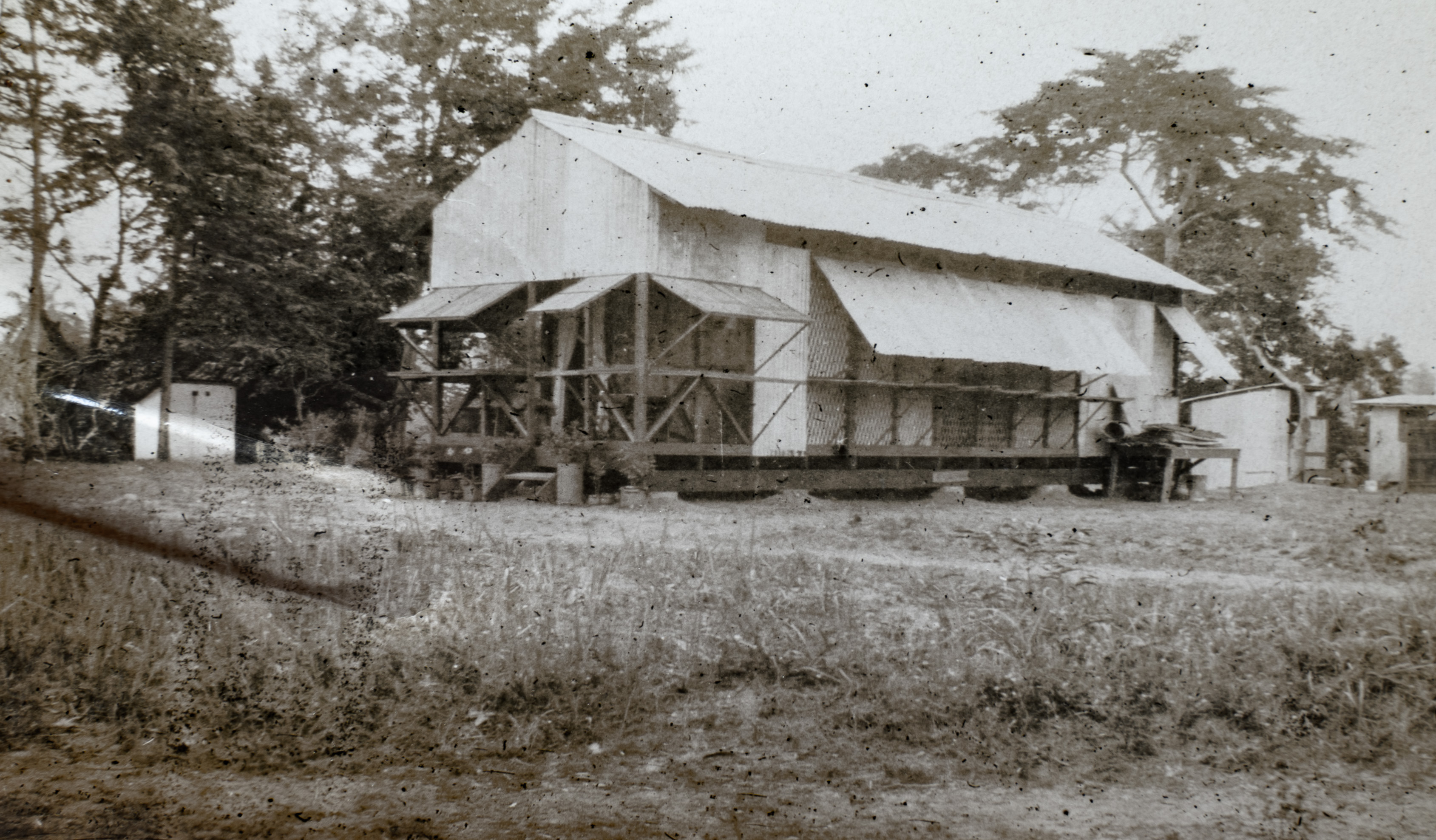
Towards the end of the tour, we went on three weeks' local leave by train to Oshogbo and then by lorry to Benin. It was one hundred and seventy miles over a rough road. Every time we came to a bridge, we got out and walked. The bridges were very primitive, and as the lorry crossed over, they writhed like a snake. Otherwise, we were on the front seat with the driver, and our loads were at the back. On top of our loads were our boys and some more native passengers. And that evening, when we got our loads into the rest house, they were soaked with perspiration. It was a very long and tiring day, and we were exhausted. I don't know how the European driver managed every day – twelve hours starting at six in the morning. On the road, we met a procession of natives dressed up for some festivities and dragging along a little bull for sacrifice. They were noisy and unpleasant; we drove slowly through them and were very glad when we had passed. They were very excited, and I don't like an excited crowd of any sort: I have seen so many of them in my life.
Our rest house was very small and hot; the two other rooms were occupied by two men whom we had met before. So we chatted a little after a combined picnic dinner, and one man lent us some liniment. He was a forestry man and did a lot of trekking on foot. There are some magnificent forests in Benin Province, and many different varieties of excellent wood are on the market now, some for export. There is one lovely wood called Offan. It is dark grey and has a delightful grain. Cuaria is a creamy pale pink wood with a wider grain, also very attractive. There are many trees apart from the common iroko, walnut, and various kinds of mahogany. I loved the Nigerian woods; one can do such beautiful things with them.
We started early the next morning from Benin, and we saw the wall around the old European reservation where, I was told, thirty Europeans were murdered some years ago. Also the tree where the chiefs used to hang people, whose branches look very convenient for that purpose. I should like to cut it down and wipe out its sinister past.
At noon we reached Asaba, on the bank of the Niger on the opposite side from Onitsha. There we had to wait for the ferry boat. We had wired the day before, but there was nothing to see on the river. It was the dry season, and so the river was low. The sandy beach was about half a mile wide, and there were a lot of islands. The fishing people came down to the beach and the islands and put up their little huts and tents. They were always there when the river goes down; but I don't know where they go to in the wet season.
We waited until 2.30 pm for the ferry boat. It was very hot on the sand where our luggage had been dumped; we sat in the shade of a tree. There were some Syrian traders with their bales of cloth also waiting for the ferry. When we eventually got to Onitsha on the other side, it was nearly four pm. Though we had wired for our rest house accommodation and transport the day before, there were no labourers waiting to carry our luggage – something must have gone wrong. As we started to walk uphill in the blazing sun, we saw a car approaching, and in it, a man we knew, a medical officer.
Seeing a European woman walking in that heat, he stopped but could not recognise us. We looked like Red Indians, coated as we were with laterite dust. When he did recognise us, he laughed and asked us how we liked travelling by road. He suggested that it was a nice change from the railway. We said that never again would we take any transport but the railway, and that we were sorry for the people who had to do it often. Of course, now everybody has their own car, so it is not so bad, but I still do think the most comfortable way to travel is by rail. It sounds like the advertisement you see on the stations at home, but it is true. Like everything else in this country, the Nigerian Railway is far from perfect. It has to contend with numerous difficulties: floods that can wash away bridges as if they were built with matchsticks; mountains that have to be climbed at a reasonable gradient, as tunnels are too costly and complicated in a country like this; and swamps and marshes through which it must pass and which cause continuous care and anxiety.
These obstacles have to be overcome by a handful of engineers and foremen and much local labour. Rail traffic planning is too difficult and complicated for the Africans, and they muddle along as best they can. There are a few European traffic inspectors who go from station to station, checking and instructing the African station staff. At headquarters, there are a few more senior officers instructing the traffic inspectors. Somehow, everything gets done, and the trains go up and down the country night and day. Sometimes a guard gets left behind, waving his flag and blowing his whistle frantically. Sometimes a train gets uncoupled, and the wagons run by themselves and finally shoot off the rails into the bush with their load of groundnuts or whatever it may be. Or a driver of a train runs over some points in the station. Sometimes the flagman of a gang of labourers goes to sleep with his head on the rail and gets it squashed beyond repair. These things continue to happen, but the railway goes on; it persists, and no matter what goes wrong, there is always someone to put it right.
To return to the Niger: our medical officer friend was going to catch the ferry, and he told his driver to take us to the rest house. It was quite a distance away; I was thankful that I didn't have to walk there. The rest house was comfortable and well furnished, but our luggage and food had not arrived, and we sat there waiting, hungry and thirsty. We occupied the time by removing great quantities of red dust. At 7 pm, when the luggage turned up, we drank at least half a dozen bottles of soda water. There was a house within ten yards of us, and we heard and saw people in the garden, but one can't very well go and ask for a drink or food. Our boys soon cooked a meal; then we were ready for bed. Some friends had heard we were at the rest house, and the next day they came and took us out for golf, tennis, and dinners.
We stayed there for four days and then travelled to Enugu by lorry. It was not very dusty on that journey, and it was only a short run, and so we were quite fresh when we arrived. The European reservation at Onitsha is built on top of a hill, and the view from our rest house was very fine. The river twisted into the distance, and the fishing people in their canoes looked like black beetles moving on a steel belt.
We were met by the engineer, and he would not hear of us staying in the rest house and insisted that we stayed with him. He turned out of his bedroom and moved into the store room downstairs to sleep. We knew him; he was a very good host. We spent a very pleasant three or four days there. There are coal mines at Enugu from which all the coal supply for Nigeria comes. It is all surface coal; the whole hill is one seam of coal. There is a stream running down the side of the hill over the shining coal. It is not very good coal and is used chiefly by the Loco Department of the railway. One night, our host and some others took us for a picnic dinner on the top of Milliken Hill. It was a beautiful moonlight night, and on the way home, we went to see the bathing pool which was under construction. It was filled with dry grass to cover the concrete while it was drying. One of the men went onto the diving board and made a beautiful swallow dive into the grass. We all laughed, but he disappeared and did not come up, so they entered the pool to look for him. They found him in a dazed state with a large bump on his head. He had gone through the grass and hit the concrete; luckily, the concrete was not fully set yet.
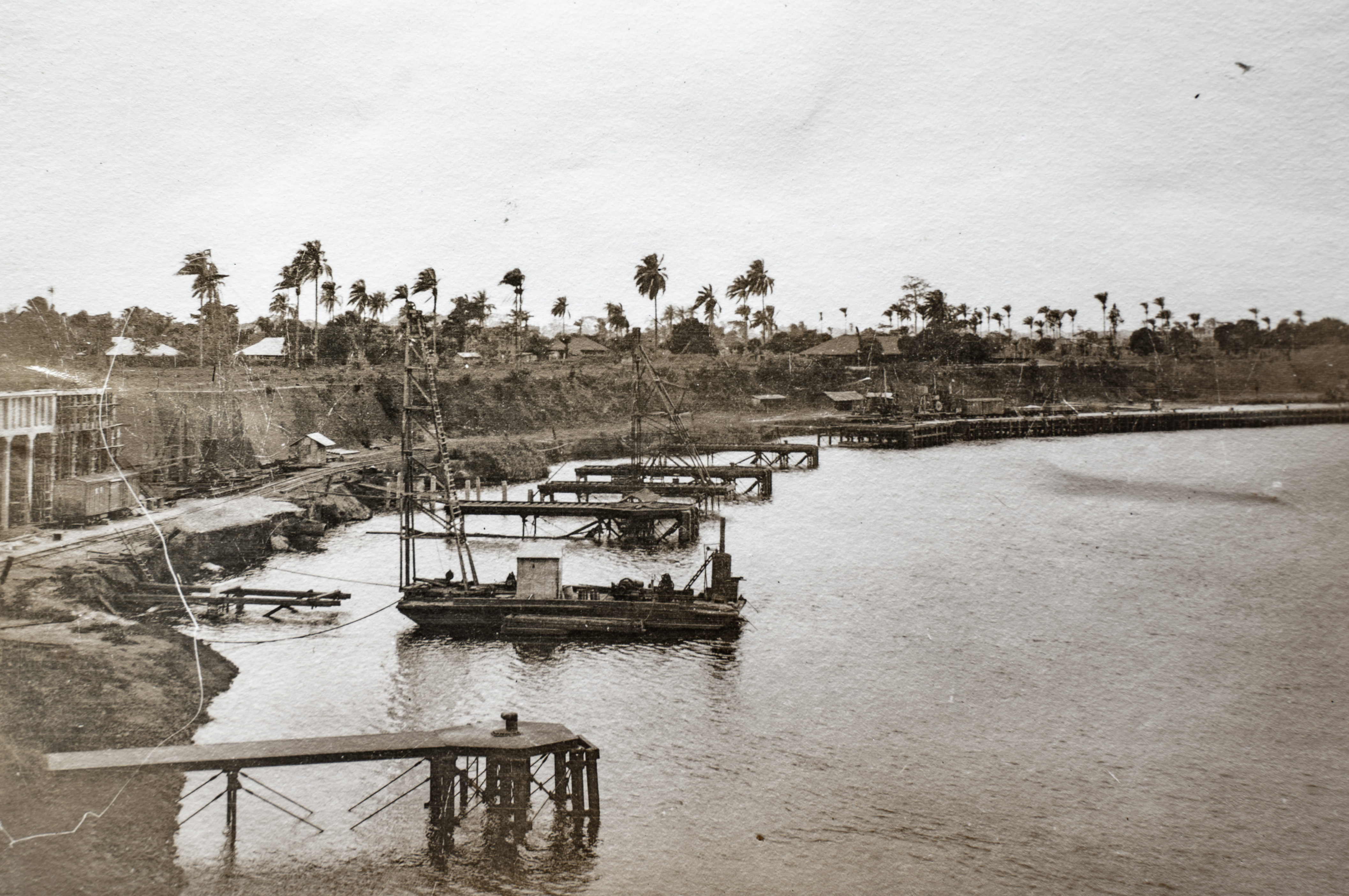
From Enugu, we got onto the railway for Port Harcourt. It was quite a luxury to get back into a railway compartment after one's experience in a lorry. On the Eastern Division, the carriages were old, with horsehair upholstery, but it felt like getting back home. We were glad to spread out our chop boxes and have a drink or some food whenever we wanted. At Port Harcourt, we stayed in a rest house. We knew a lot of people there who took us around, and we had a very pleasant time during the four days we were there.
We had a permit to return on the Ajasa, a pleasant little boat with a few cabins, but a high-ranking official was due to travel to Lagos on it, and there was no room for us. So we waited for the next boat, the Enugu, a coal-carrying vessel with one passenger cabin. We left the day after the Ajasa. We were told that the captain would feed us and we should pay a set amount at the end of the journey. We never saw the captain during the entire three-day voyage. However, we heard his loud voice in a language I did not understand – to my husband’s great relief. The captain never invited us to the mess, never asked if we were comfortable, and even told his officers not to come near us.
We were caged up in our little cabin, which was partitioned off with a thin wall. The other half was occupied by the native servants of the captain and the two officers. We had to listen to them giggling and talking in pidgin English. The main topic of their conversation was the Europeans on the little boat. There was no accommodation for washing or washing up. All we had to eat were a few tins of food, fortunately left over from our journey. We had not bought any more supplies at Port Harcourt, thinking we would be fed on the boat.
Our boys were dirty, crowded in with the other native passengers on the deck. We had no access to the deck. There was a tiny space under the ladder with room for just one chair, but the native staff of the boat used it for their own purposes. So we couldn’t go out there, and, of course, we couldn’t sit with the natives on the main deck — even if there had been room to sit.
We had never before been so anxious to see Lagos as we were then. When we got to the quay, we saw a friend of ours, a marine officer. As we left the boat, we asked him why we had received such treatment from the captain. He could not understand and said that he would enquire, but we never found out. There was only one other occasion when I encountered such discourtesy. I was in the train, and a man was occupying a compartment with a table; he spread himself about, and opposite him, on the only other seat in the compartment, was his dog. He never stirred to move his dog or make room for me, so I sat in the corridor on a straight-backed bench for five hours. He was a Commissioner of Police, and from his appearance and his reputation, I gathered that there were very few people to whom he would give up a little of his comforts.
I am glad to say that cases like that are very rare; men are exceptionally nice to women in Nigeria and offer help in every way to make life easier for them. In fact, in some cases, it would be better if they left the women to do a little for themselves because some women take courtesy as due to their personal charm. When they get home, they find it is very hard to have to stand in trams and buses.
From the boat, we went by train to Offa. It was delightful to get home again. I had a disappointment on our arrival; I found that a spitting cobra had spat in my cat's face and it had lost one eye. Also, our parrot had learned to imitate the nasty cough of a watchman in awful detail.
We often had people coming to stay with us when we were not on line. One afternoon I heard European footsteps on the verandah (in Nigeria one can easily distinguish the footsteps of a European as they wear shoes). So I tidied myself up from my post-lunch siesta and went out to see who it was. It was a young man: a missionary, who said he wanted to stay the night as he had missed the passenger train that day. He had come from a place forty miles away, and I said that he could stay as long as he liked. Soon my husband came home, and after tea, we took our visitor out to the reservoir on a little punt in which we used to play about. There were a lot of water lilies and reeds at one end of the reservoir, also many birds of different colours and shapes, and it was amusing to watch their habits. One little bird with very long thin legs laid her eggs on a water lily leaf. The eggs were a pretty brown, specked with cream, and usually there were five in one nest. They did not mind our intrusion. When it got dark, we returned home for dinner and spent a very pleasant evening talking.
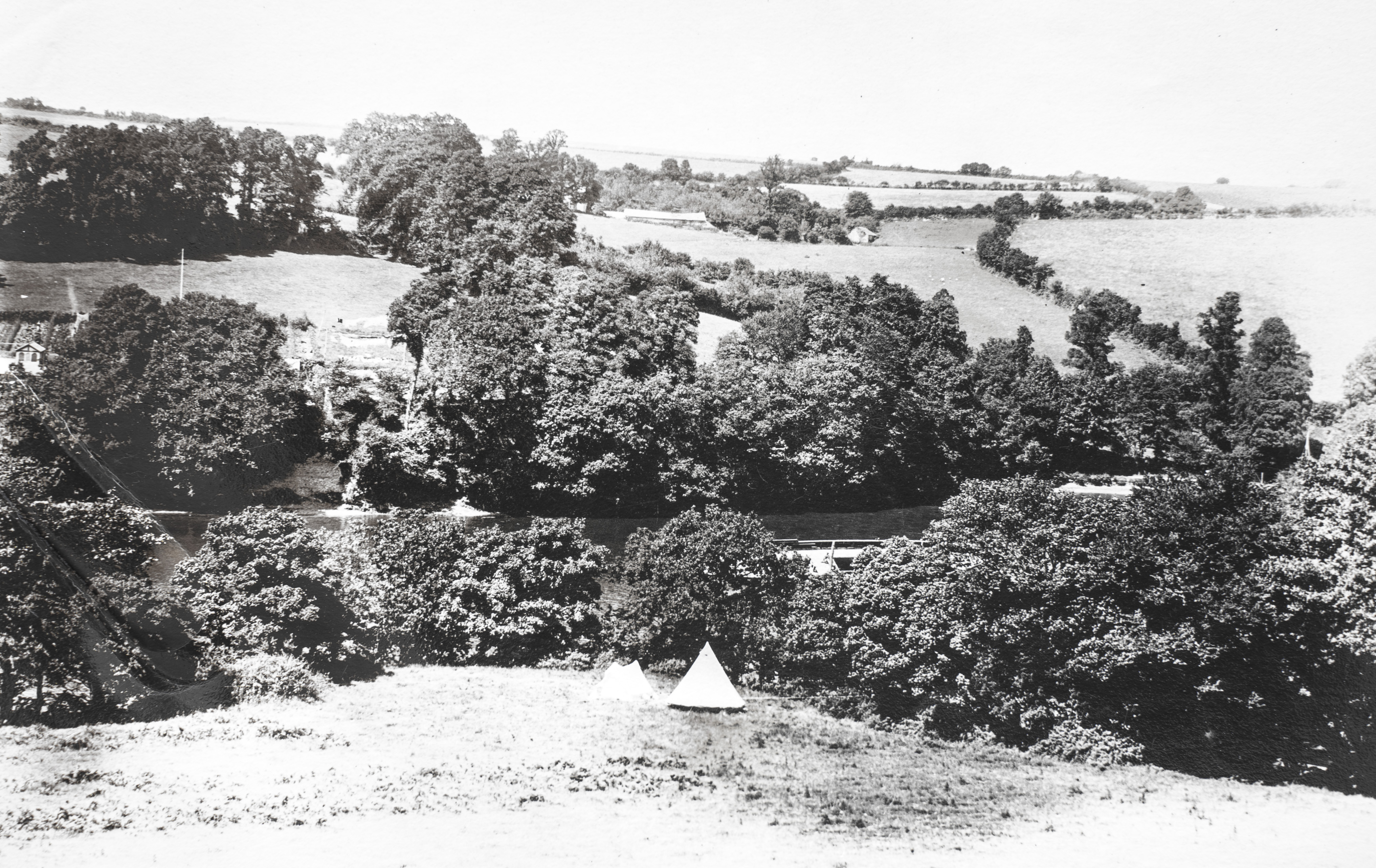
The missionary had only been in the country for one month. He had been brought by train from Lagos to his station and left there with the natives. He was a godsend to the natives, being so young, inexperienced, and fresh out of college. They charged him extortionate prices for everything and had generally exploited his innocence for the whole month. The next morning, when he was ready to go to the station, he asked us how much his bill came to. When we said that there was nothing to pay, he was surprised, as he had thought we were the caretakers of the rest house. When he had missed his train, his sensible carrier had brought him to us, and he thought it was a rest house. I remember a similar thing happened once in Fowey (Cornwall) when my husband received sixpence from an elderly couple for disentangling their rowing boat from the others. We were camping there and had a boat to go about in, and while he was getting his boat out, he helped the old man to get his. We heard his wife grumbling at him for being so generous, telling him threepence would have been quite enough. I agreed with her.