Chapter 16: Southsea and Sunstroke
When I reached Lagos and saw the long gangway of the boat, I felt very depressed. I knew I could not walk onto the boat, and this helplessness made me quite weepy. However, there were some people that I knew on the boat train, and when they came out of their carriage in the early dawn, they helped me to get on board. After four days at sea, I felt much stronger, and towards the end of the voyage I was playing quoits. A friend of mine, a lady doctor, was going home on the same boat, and she had a car aboard which she was taking to Cowley to be overhauled. She asked me if I would like to motor with her from Plymouth to Oxford, and from there we would go to London by train. Our boat arrived in the early afternoon at Plymouth, but by the time we went through customs it was six o'clock. She was a good driver, and in spite of the speed restrictions we had covered many miles by nine o'clock that night.
We had great difficulty in finding anywhere to stay for the night, as it was the week of the August bank holiday. In the end we found a pub in Honiton that had two bedrooms. It was not too clean, but we were tired and did not notice much.
On Sunday morning we went on to Oxford. It was delightful to see the English countryside in the soft sunlight, after the glare of Nigeria. I arrived in London on Sunday night, and on Monday went to see a doctor. In the afternoon I went by train to Sussex to stay with my in-laws.
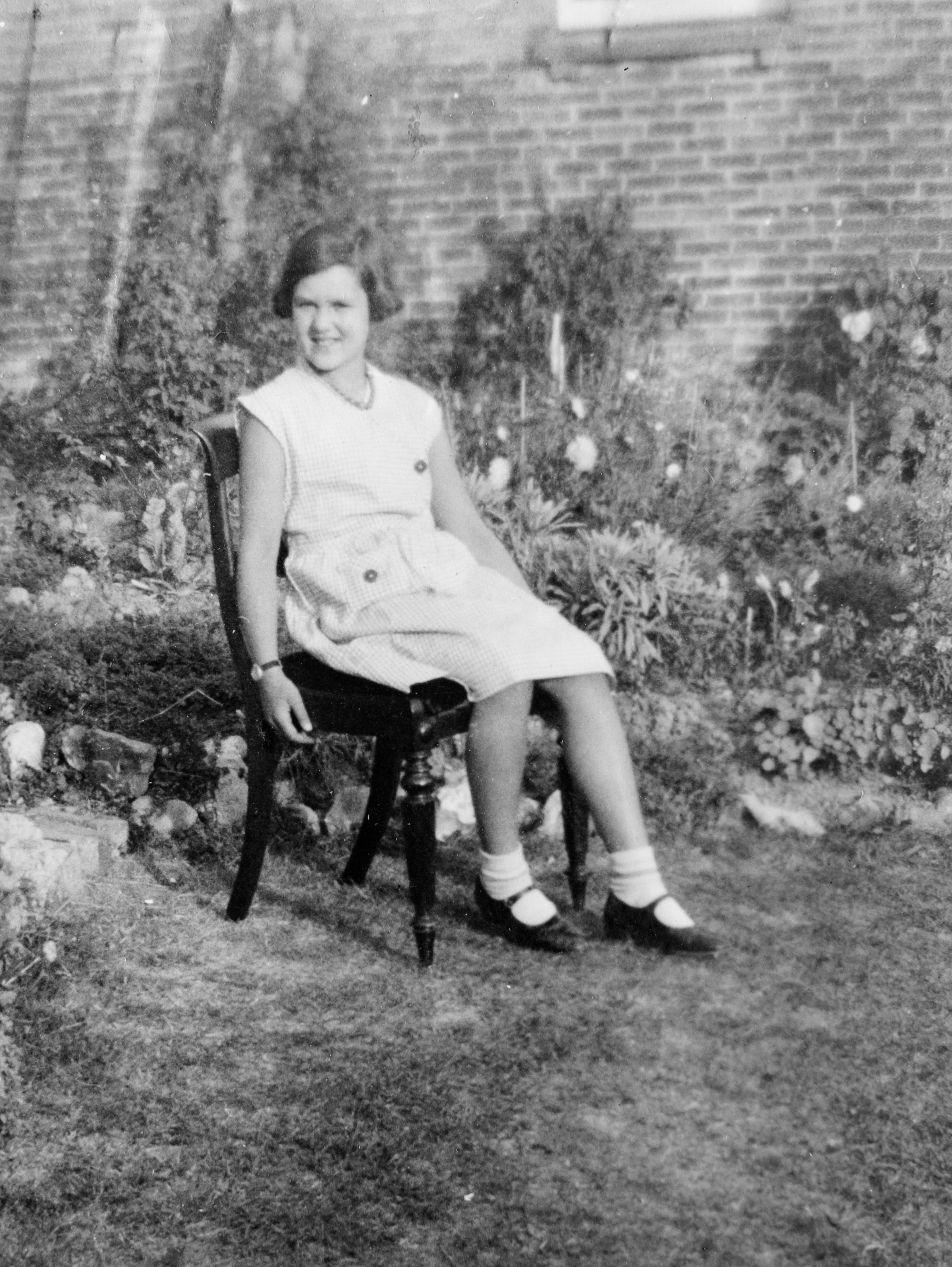
Helen was there on her summer holidays, and we amused each other, both having nothing to do. I felt like an old horse must feel when it is turned out in the field by some generous master to pass its happy days in idleness. Helen could not understand my dilapidated condition. Once we were bathing by the sea, and after swimming we marked out some squares on the sand to play hopscotch. Helen marked out a path around the squares, so I asked what the path was for.
She replied, "It is for you, Mummy, as you are elderly and cannot jump so far."
So I asked her how old she thought I was.
She said, "You must be twenty-five!"
She did not say that to flatter me, but with proper respect to my old age. I told her that I was many years older than twenty-five but that I would play the game with her on the level, because I was not too old for that.
After Helen had gone back to school, I went to stay in a small private hotel in Southsea. I had to follow a diet, and it was not very easy to eat foods that I wanted. I decided to find some rooms, and every day for a week went out looking for a suitable place but could not find anywhere that did not smell either of fish or boiled cabbage. In the hotel, the room opposite to mine was occupied by a woman with an Alsatian dog. It was a fine animal, but unfortunately it did not like me from the first. He spent most of his time on the mat outside her door, and I had to pass him every time I went in or out. I was in such a state that even a growling Pekingese would have made me jump, so the Alsatian used to make my knees very shaky, and my heart would thump in a most alarming way.
After a week of this I changed my hotel for another. My room was not as nice, but the lounge was very comfortable, looking out to the sea, with a cheerful fire always burning. The guests were nearly all wives of colonial civil servants, and the atmosphere was very much like it was in a small European station in Nigeria. We had very pleasant evenings talking of our experiences in various parts of the world. They were nice women, some with children, others by themselves. I should have liked to have stayed there, but again the food was not suitable. I found some rooms in the end which were just what I wanted.
The way I found the rooms was rather amusing. Some years ago a palmist told me that my lucky number was three. As I walked in a quiet street one day looking hopefully for a "TO LET" sign, I passed a gate with the number thirty on it. I glanced up at the house and saw a nice-looking front with tidy windows and all the woodwork newly painted. I went up and rang the bell and waited a moment. The door was opened by a man with a big scar on his face. As soon as I saw the hall of the house, I knew I could be happy there. It smelled of polish and was very inviting. It had a big stained glass window that threw soft light onto a pretty red linoleum floor with a few blue rugs about.
There were a few good ornaments very artistically arranged. I asked the man if I could have rooms for two or three months. He went away to ask the mistress of the house. She arrived at the door with a spotless white overall on; a very pleasant woman. She told me that they had only recently moved into the house and were not yet ready to let the rooms, but if I would wait a few days she would take me. I told her that I would need a special diet as I was recovering from an illness. She said she would do it, and I felt confident that at last I should start on the road to recovery.
I moved in a few days later, and from the first day I began to feel stronger. She was a good cook, and the house was spotless. Both my rooms were very prettily and comfortably furnished, and when the weather was cold I went to bed with a cheerful fire burning in the grate. The manservant was a soldier disabled in the war, and he looked after me very well. I used to go to bed at eight o'clock in the evening because I was tired, so they gave me dinner at seven. In the morning after breakfast I went down to the sea to sit in a sunny shelter and watch the boats coming in and out on the Solent. There were small boats going around the harbour, paddle steamers that went back and forth to the Isle of Wight, huge liners passing en route to Southampton, and naval battleships, destroyers, and submarines.
Very often somebody would speak to me, or a group of people would start a conversation, and I would sit and listen. Most of the people that patronized these shelters in the winter were retired from the navy, and they would spin very interesting yarns. In the summer one did not notice them, but in the winter they met regularly in various shelters. Often a woman invalid or convalescent would talk to me and describe all the details of her illness. I always felt I had the same symptoms, whether she had had an operation for kidney, liver, appendicitis, or ulcers. When my imagination got too active I would get up and say goodbye to the invalid and tell myself not to be a fool.
When Helen came to spend Sundays with me, we would go to the Isle of Wight by steamer. We often met some of my invalid acquaintances! They would smile in recognition, and Helen would ask me who they were.
I would reply, "Oh, that is old ulcer, or spine or kidney or appendicitis,"
Helen would say, "What funny names your friends have!"
One Sunday one woman whom I had described to Helen as "Kidney" was on our boat, and she came and asked us to help her up the gangway as she did not feel strong enough to walk by herself. Helen was very pleased to do her good deed for the day.
She said, "I will help you, Mrs. Kidney, I am very strong!"
The woman looked at me and I blushed; she did not speak to me again.
In November I sailed for Nigeria in a German boat from Southampton. It was a very wet and cold day. There was not a soul that I knew on that boat, and I was glad, because I had a cold. I had the best cabin on the boat as I had booked my passage in a hurry and they only had the luxury cabin left.
Sailing from Southampton was much nicer than sailing from Liverpool. I watched the landscape slipping past for a time, then went to bed and stayed there till next morning. My cabin steward, table steward, deck steward, and the stewardess all came to inquire how I was and if I wanted anything. They brought me a very appetizing dinner and inspected all my windows to see if they were shut, and I was almost tucked into bed like a baby. As soon as they had gone, I got up and opened the windows, but soon after a steward came in great alarm and apologized, saying he had forgotten to shut the window. I said I had opened it after he shut it because I liked plenty of fresh air.
He said, "Oh, hot?" and to save a long conversation I agreed.
During the night I woke up shivering with cold. The steward had switched the radiator off as he went out, and I had not noticed. He thought if I had the windows open I must be one of those queer people that felt hot, even if everybody else froze. While the weather was cold they kept all the windows and doors shut, which made it very hot everywhere inside. If you opened any door to go out on deck, the hot air came out of the room with a rush and almost pushed you out. I was surprised that it was not bad air; they must have had a very good ventilation system.
People sat in the lounge or the smoking room drinking tea or coffee or beer, listening to the little orchestra which was composed of stewards and which played several times a day. I spent most of the first few days on deck. When I got on the boat, I thought everyone was German, but I soon found out that nearly half of the passengers were English. Most of them were going to South Africa, except a few that were for the west coast, and who were at my table. They were all United Africa Company employees, and one was the wife of the company's agent.
They were a friendly crowd, and all through the voyage we did things together. We played games, took tea in the lounge, and passed the evenings together, playing some childish games or cards. After the weather became warmer, nearly every night something was arranged by the ship's staff to amuse the passengers. One night it might be a cinema show with Clark Gable and Joan Crawford, or it might be a fancy dress dance, for which the crew decorated the boat and themselves very attractively.
Halfway through the voyage the passengers of different nationalities had become acquainted with each other. Most passengers and staff spoke English. The tourist class passengers joined us nearly every night when we had a show on, and amongst them were some very interesting people.
At every port of call most of the passengers went ashore. When we came into the tropics, I was amazed to see that most of them wore only straw hats, and very few of them had sun helmets, a thing which was very rarely seen in the English possessions on the West Coast. On the coast there had been so many cases where careless newcomers had suffered agonies from sunstroke. It was difficult to realize that the sun was dangerous when you came out there the first time, because it did not feel too hot. The sun did not scorch you (at least not in southern Nigeria), and you might be lucky after the first exposure and just feel tired, with a slight headache, or you might be one of those really fortunate individuals, one in a thousand, who were not affected by the sun; but in most cases, if you went out without a helmet after nine o'clock in the morning and before four thirty in the afternoon, you would have a very painful experience.
I knew it too well, because I had it myself on my first tour. I was one of those difficult people that must learn things by bitter experience, and when I was told to be careful and not go out in the sun without a helmet, I thought people were too cautious and did not enjoy sunshine as much as they might, and that they wanted to frighten me into being the same. Disregarding the good advice, I went out gardening hatless until eleven o'clock in the morning. I did that for several mornings without much punishment except feeling tired, which I put down to the heat.
One morning I collapsed and was brought into the house feeling very sick with terrible pains in my head and down my back, and my pulse racing. The doctor was called and diagnosed sunstroke. I recovered slowly, but since then I had been very sensitive to the sun. If I had to go out in the middle of the day without a helmet, sunglasses, and sun shade, I always had an unpleasant night afterwards. I only went out during the day for short spells now, perhaps to direct a garden boy, to rescue a chicken from a hawk, or other emergencies like that. Had I followed the good advice of more experienced people, I would have enjoyed this country much better. If you were reasonably careful from the beginning you could get acclimatized and the sun did not affect you — not to the same extent as it did at first. One could not alter people though; some were born to take notice of danger signals, and others must go through the experiences themselves, bitter or sweet, as they came to them.
When we docked at Lagos, only three of our table were left: the U.A.C. man going to Lagos, an old retired man of the same firm going on a round trip via South Africa and Hamburg to miss the English winter (which was so trying to the old coasters), and myself. On the way I received a letter from my husband saying that he was taking a few days local leave and coming to Lagos to meet my boat. When we were drawing into the wharf at Lagos I was very busy trying to single him out, but there was nobody there at all resembling him, except one man who had on a wrist watch. I knew that was not my husband because he could never keep a watch more than a few months. Something always happened to it; he gave up in the end and never attempted to wear one.
When we got nearer, I saw that he was not there, but there was one of our engineers and his wife, who waved to me as soon as they recognized me. When the gangway was lowered, they came up, and after the greetings they broke the news to me that my husband could not come to meet me as he was ill in Kaduna hospital. After I had got over the initial shock they gave me a telegram, which informed me that he was suffering from congestion of the lungs, that he was getting on well, and the worst was over. That was a relief, but not what one wanted to hear on arrival, after a few months of parting.
All my acquaintances on the boat came and asked me why my husband was not there, and after hearing the bad news they were very kind and sympathetic and tried to cheer me up. The stewards had my luggage out to the customs house very quickly and helped me in every way. When my luggage had been cleared through customs, my friends told me that they were taking me to the European railway reservation at Ebute Metta, to stay with the chief engineer's wife who had kindly arranged to put me up until my husband was better. When I saw my hostess I told her that I was very grateful for her thoughtful kindness, but that I must go up to Kaduna to my husband by the next day's train. She gently tried to persuade me to stay for a few days until I heard that my husband was ready to come out of hospital, but I felt I must go; I even became suspicious and thought he must be dead, and they were trying to break it gently to me. I asked them if it were so, but they assured me that they were only thinking that it would be much easier for me if I waited till everything was settled. They were very kind and I was grateful, but I went up by train the next day.
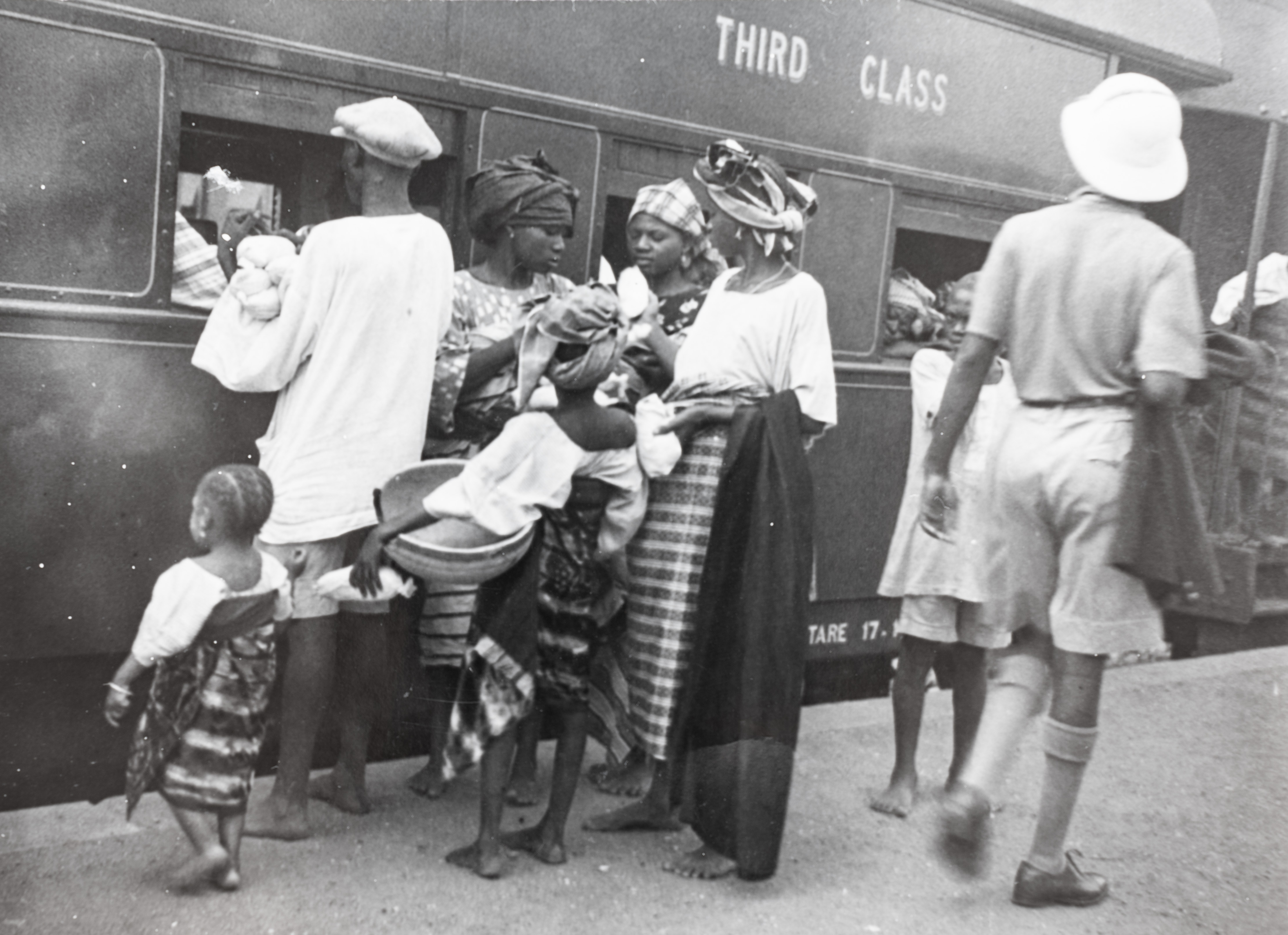
However, when my train drew into Minna station, another train from Kaduna arrived at the same time, and my husband came out of his carriage, looking tired but all smiles. They had discharged him from hospital as they knew that he would be looked after during his convalescence now that I had arrived. The doctor ordered him to take local leave before resuming his duties, and we decided to go to Enugu. Only six months were left until we were due to go home on leave, and the chief engineer suggested a transfer to Makurdi for the rest of the tour. It was very near to Enugu, and the engineer at Makurdi was due to go on leave very soon. This arrangement pleased us both because we liked Makurdi.
We spent three weeks at Enugu in a railway house opposite the club and played snooker there every morning with some people who were on local leave. We hired an old car from a native motor dealer and had some very exciting excursions during the day, but put the car to bed at night as she had no lights. Some of our old friends were at Enugu, and as my husband got stronger, we accepted some invitations for the evenings. At Makurdi, we found everything as we had left it eighteen months previously, including nearly all the European inhabitants.
The natives in this country always made a tremendous fuss when they met anyone they knew, but it was not always true affection that made them so hearty. I knew a case of a man retiring after a long service in southern Nigeria who had a reputation for being rough with his labourers. When he arrived at the station to board the boat train, the station was packed with his men, and as soon as they saw him, they started to cheer him wildly.
Some European friends were with him, and he said to them with tears in his eyes, "Look at these blooming natives, I have banged them about, cursed them, and lost my temper with them, and now they come and cheer me as if I were their Father Christmas. They are a good lot, and I am mighty ashamed of myself for being a little rough with them when they exasperated me."
There was a missionary on the train, and he came quietly to the man who was so overcome by his feelings and asked him if he understood Yoruba.
The man said, "No, I don't go in for all this native language, I leave that to you missionaries. English is good enough for me."
"Well," said the missionary, "all this crowd of people who have come to see you off are calling you all sorts of uncomplimentary names, and I just thought I had better tell you."
The man was taken aback, but by the time he recovered his speech the train had pulled out of the station.
All the natives working on the railway on this section appeared to be very pleased to see us and called down all kinds of blessings on us, including the wish that we should be rewarded for our virtues with a large family. The five months that we spent at Makurdi were pleasant, and nothing out of the ordinary happened except my visit to Enugu hospital for a final cure for dysentery.