Chapter 17: Some Poetry
We sailed for home in July, and on arrival at Plymouth, took a train to Southsea. I had been staying by myself in Southsea the previous autumn. I had made friends with a lady who was staying in the same hotel while her flat was being decorated. When she left the hotel I used to visit her in her flat, which I admired for its convenience. She told me that we could have it when we came home on leave, while she was away staying with her relatives. I was delighted with such an offer, and we arranged that I should let her know the day of our arrival, so that she could vacate it for us to come in straight from the boat.
We arrived in the afternoon and taxied to the flat. The maid was left to get our tea ready and we were charmed with our home. It was a tiny flat just like a doll's house, with one bedroom, one sitting room, the tiniest dining room we had ever seen, and a kitchenette. It was all electric, and my friend had left us her wireless set. Such a luxury, to turn on the wireless and hear the news of the day. In Nigeria few people had wireless sets as the reception was very poor. In Lagos now, nearly everyone has a set, but up country they are still rare. It has to be a short wave set (whatever that may mean) and up country, it usually lets you down when there is something very important on. Our mails came once a fortnight, and in some far away stations it takes one week to get from Lagos, so the news we read is often one month old and certainly at least three weeks. One can imagine the thrill of being able to hear the news of the day on the day it happens.
We arrived on Saturday, and Helen came from school for the day on Sunday. She was delighted with our little doll's house from which we could watch the sea, and the ships coming in and out of the harbour.
Before we left Nigeria, we had a bottle of liquid quinine made up by a native dispenser, and on the voyage home while we were taking it I thought it tasted different from the usual, but we went on taking it, as it is dangerous to stop until a month after one gets home. On the boat we both felt very energetic, which is not usual coming from the coast at the end of the tour. When we came to Southsea, I took the bottle to the chemist to be analysed, and found out that it was a solution of hypophosphate tonic, with a very small percentage of quinine in it. We stopped taking it and started taking quinine, but the reaction came, and for a month afterwards we felt very sleepy. We often did not wake up until eleven o'clock in the morning even though we had gone to bed at nine o'clock the previous evening. Very often the girl who came to clean the flat was alarmed, and banged on the bedroom door to see if we were alive. But after a month of this sleepiness, we became normal again and began to take interest in life.
We bought a Baby Ford (model Y), our first new car! It was a joy to go about without worrying if anything was falling off. Helen was very excited about having wealthy parents who went about in a new car, not realising that one can have a new car and not have enough money to buy a gallon of petrol. She asked me one day if Daddy was now a wealthy man.
I replied, "No, very poor, much poorer than he was the last leave!"
She sighed and said that she wanted four shillings for the school photograph and two shillings for two birthday presents, and gave me a list of various things that she "simply must have". I told her that I was glad she was not a twin, and she suggested that she might have been triplets!
When Helen was small she told me that she did not mean to be poor like we were, so I asked her how she intended to get rich. She said she was going to write books of poetry that would bring her a fortune, and she would have a lovely house with a room for us to come and stay for weekends. I was rather hurt at being invited only for the weekend, but I daresay we can manage to prolong the visit once we get in.
The last English mail has just brought the school annual magazine with a piece of Helen's poetry in it. Here it is:
The Seasons
A white-robed maiden walked o'er the land,
Scattering snow from her lily white hand,
Glittering icicles crowned her hair,
Her feet and her delicate arms were bare.
A slender maiden, with tripping feet,
Came dancing through the new spring wheat,
Her gown was green with a golden veil,
Her sash was a mass of wild flowers pale.
A lovely maiden with rose-coloured gown,
Lay on purple thyme scented down,
With fragrant rose-buds, her hair was wreathed,
And butterflies drowsed in the scent they breathed.
A dark eyed maiden stood midst the trees,
On her head was a circlet of gold brown leaves,
Her gown was russet with a sash of gold,
And her hands a cluster of crab apple hold.
I suppose it is infringement of copyright to reproduce it here, but I don't think my daughter will sue me for this irregularity.
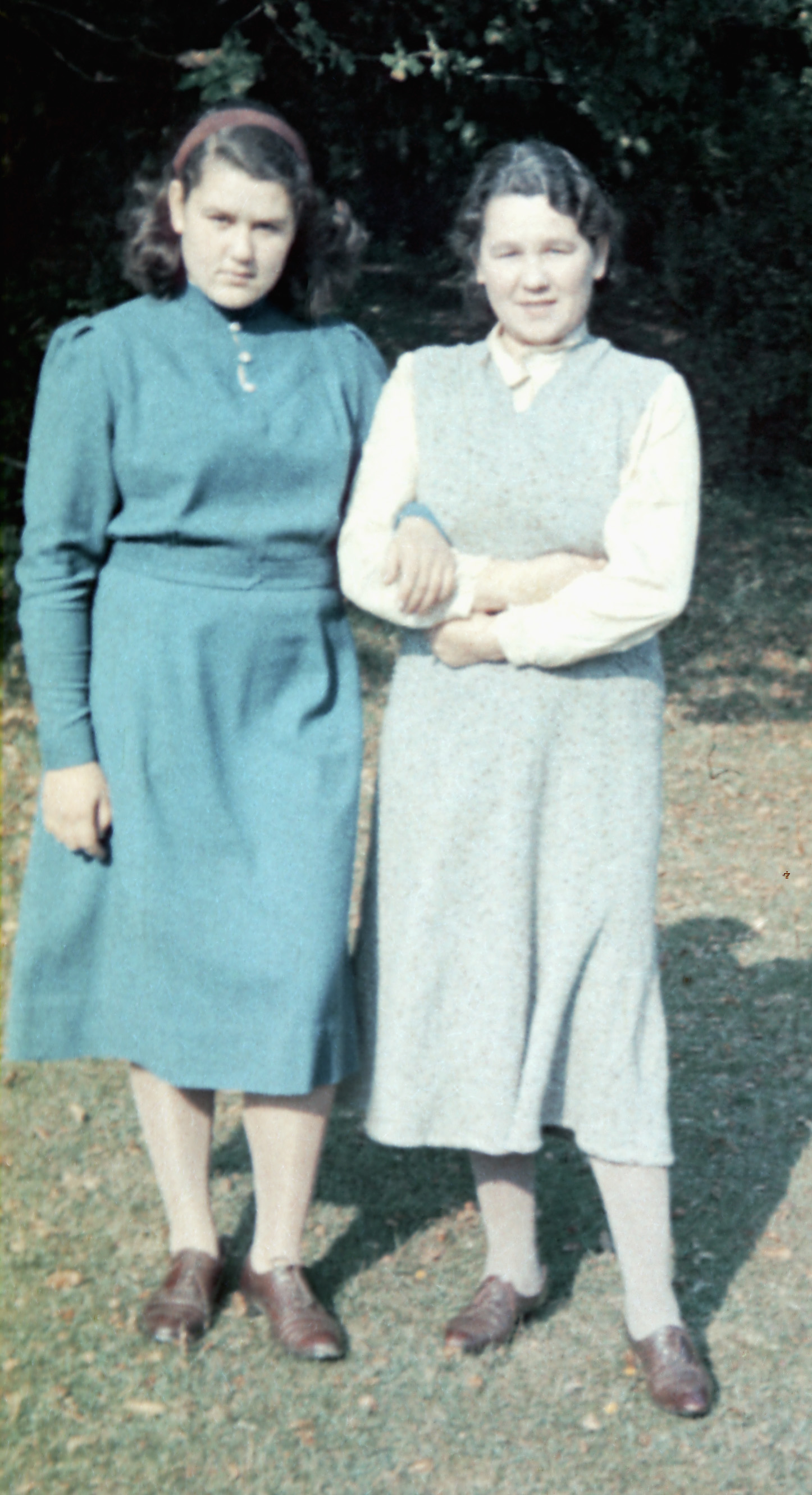
Three years ago she sent the school magazine containing her first effort, it was a pretty combination of words, about the ocean, with its storms and dangers. When we went home I bought her a book for writing her poetry, but she has never shown it to me, and I don't know if she has anything worthwhile in it. I hope she will be able to achieve more in life than I have. I was a poet too while I had my own language, which so obediently expressed my thoughts and moods. I lost the muse while I was learning the language of my adopted country, and trying to look after my family. I think I am quite useful about the house, but I am sorry that I am dumb now. Once again I feel the need to write, and it is like trying to fly with clipped wings.
I am sorry Helen is a poet as a poet's life is hard. One gets more easily hurt and there are moments of anguish and loneliness when life presents ugly and crude obstacles to truth and beauty. But one cannot discard that gift, one is born like that. Even if you don't write poetry the germ is always there; it may develop into a divine feeling of happiness or it may cast you into the darkness of despair, according to the sunshine and clouds of the day.
I go through my books of poems and stories, and cannot believe that those are my words and my expressions, in a wonderful language that is now strange to me. Of course I understood everything when I read it, but as I have not thought or written in Russian for many years, I have forgotten such a lot, and it is impossible for me to express myself in Russian. It seems hardly credible but it is true as I did not associate with any Russians nor use the language. Gradually Russian got pushed out of my memory and now when I meet a Russian I have great difficulty in finding the right words to talk to him, and am slipping the whole time into English without noticing it.
While I was writing this book it grieved me to see what clumsy, simple language I used to tell my story, and what a limited vocabulary I have at my command. A friend of mine who kindly undertook the task of correcting my spelling remarked to me what a quantity of "beautiful" I sprinkle on to nearly each page. She pointed me to a page where there is a "barber's shop with a beautiful parlour." I looked at it and saw that the native typist had put in "with a beautiful parlour" instead of "beauty parlour". I laughed and said that I was not guilty this time. The typist was so used to typing the word "beautiful" that he typed it by rote.
I must tell you how this book started to be typed. After I had written two hundred pages of my scrawling writing, we went to Ebute Metta on the coach, and when a friend of ours asked me to spend the day with her I took my manuscript with me to ask her opinion on it. She is a well educated girl who can criticise literature, and I thought if she approved of it I would go on with it; but if she did not, I would stop and get on with my sewing that had been neglected for some time. When she had read it she offered to correct the spelling for me, and also any sentences that were grammatically wrong and advised me to go on with it. I had to write it while my husband was away at work, as I did not want him to know anything about my outbreak of writing fever, suspecting that he would be more pleased if I had malaria than this strange malady.
When my friend sent me the first instalment of corrected work, we had other friends of ours staying on the coach in our station. I knew that the wife could type, and as her husband had a typewriter on the coach, I brazenly asked her to do a little typing for me as I badly wanted to see how my story looked in print. I told her it was a secret and she promised to keep it. She started very enthusiastically, but as the pages of my writing were so liberally decorated with corrections in red ink, she soon got tired of this truly dazzling work and begged to be relieved. I had sent off my garden boy who was half witted (I thought) and harmless to Ebute Metta to collect the manuscript and also gave him an ice box, and an order to the cold storage company, for some butter, cheese and bacon. He did not come back until four days had passed, and I expected him to be away one day only. We could not trace him anywhere, and I was very anxious to know the fate of my manuscript.
The manuscript that I had written between such important interruptions as:
"I get no stakie on the market I get pork heart there be no veggies in the market today and all too dear,"
and so on, all the morning.
The garden boy arrived on the fourth day with wild stories that he had been robbed, which meant that he had sold my stores, got gloriously drunk and stayed in Lagos with his friends as long as the money lasted. The miracle that I was praying would happen, did happen, but only partially. He brought back the manuscript and some typed sheets of paper, almost complete. It was terribly crumpled, a little torn, and some sheets missing but luckily only a few. After sorting out that grubby bundle I found there was not much to re-write. I was so glad to receive my papers, that I only dismissed the garden boy without investigating much of his doings in Lagos. He came next day to thank me for being lenient with him and not making him pay for the loss of the stores, and offered for sale some seeds which I had given him a few days before. He was a psychologist, that fellow, and had a sense of humour. I had another lesson, it was like being kind to a fat donkey, only I moved the peg myself this time, and laughed at myself only.
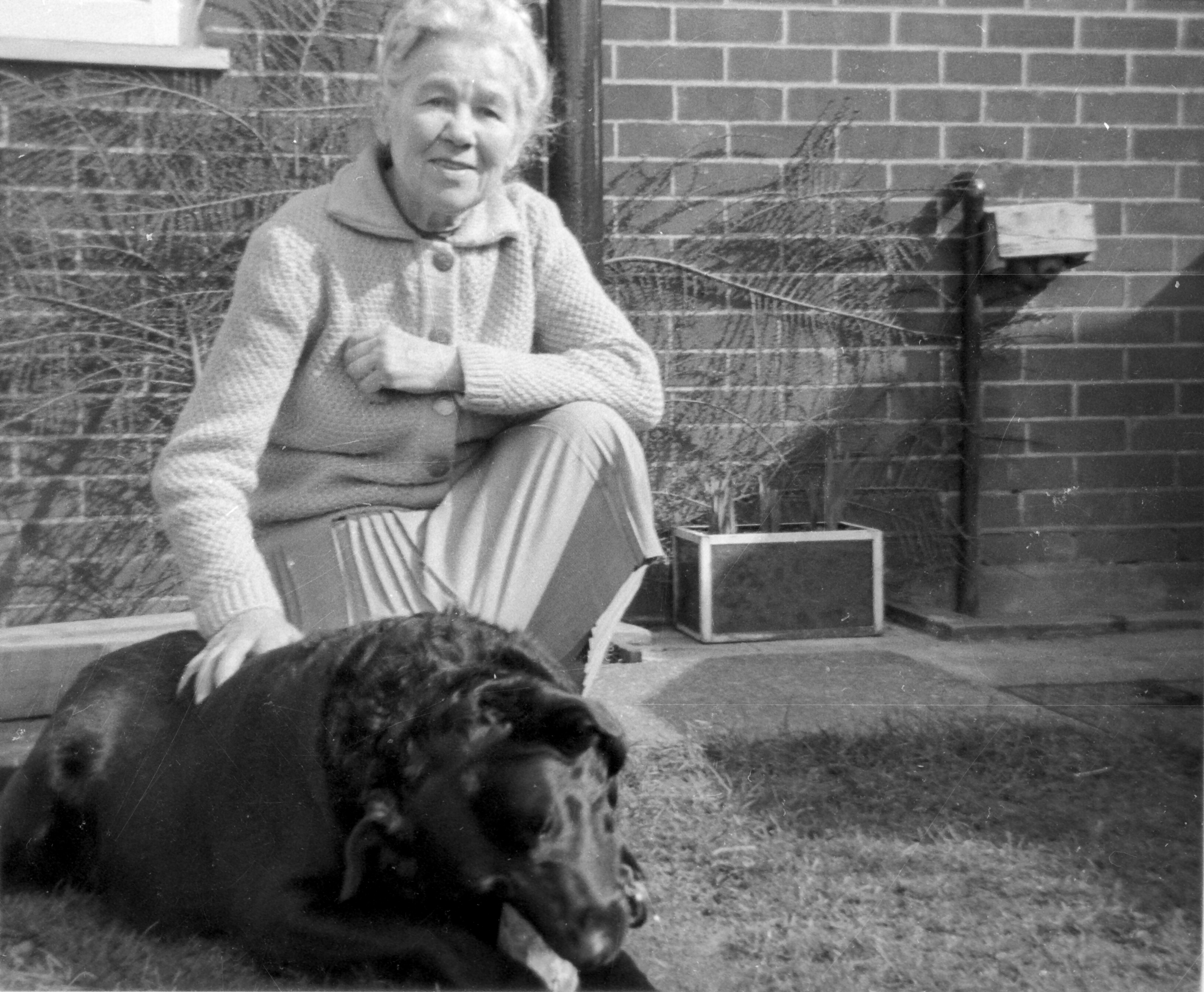
A day or two later, a man came with a petition to ask me to plead with my husband to give him a job. I asked him what sort of a job he was looking for, and he said a clerk. I asked him if he could type, and he said he could. I tried him and to my great astonishment he could read the manuscript. I gave him the job of typing this book, which he did in our house at odd hours. Occasionally he put his own interpretation on the words and sentences which he could not read, and sometimes it was an extraordinarily funny meaning, before it was corrected. But as he got used to the writing he did it very well.
I think now I must finish and see what will happen to this book. I have just remembered a little nursery rhyme from one of the children's books that I used to read to Helen when I put her to bed.
There was a little gnome,
That used to like to roam,
But he found a little shed,
With chimney, white and red,
And quite forgot,
To roam a lot,
And settled down instead!
Shall I ever have a shed and ever settle down I wonder?
27.03.1937Ibadan