Chapter 13: Golf, Floods and a Very English Scandal
When we came out to Nigeria on that tour, my husband was posted to Enugu. We were very pleased; we had always wanted to go there. We went by boat via Port Harcourt, which had not altered much. The only change I noticed was that they had pulled down some of the old railway houses. There were not as many people; the economic depression had made it necessary to reduce European staff in every department.
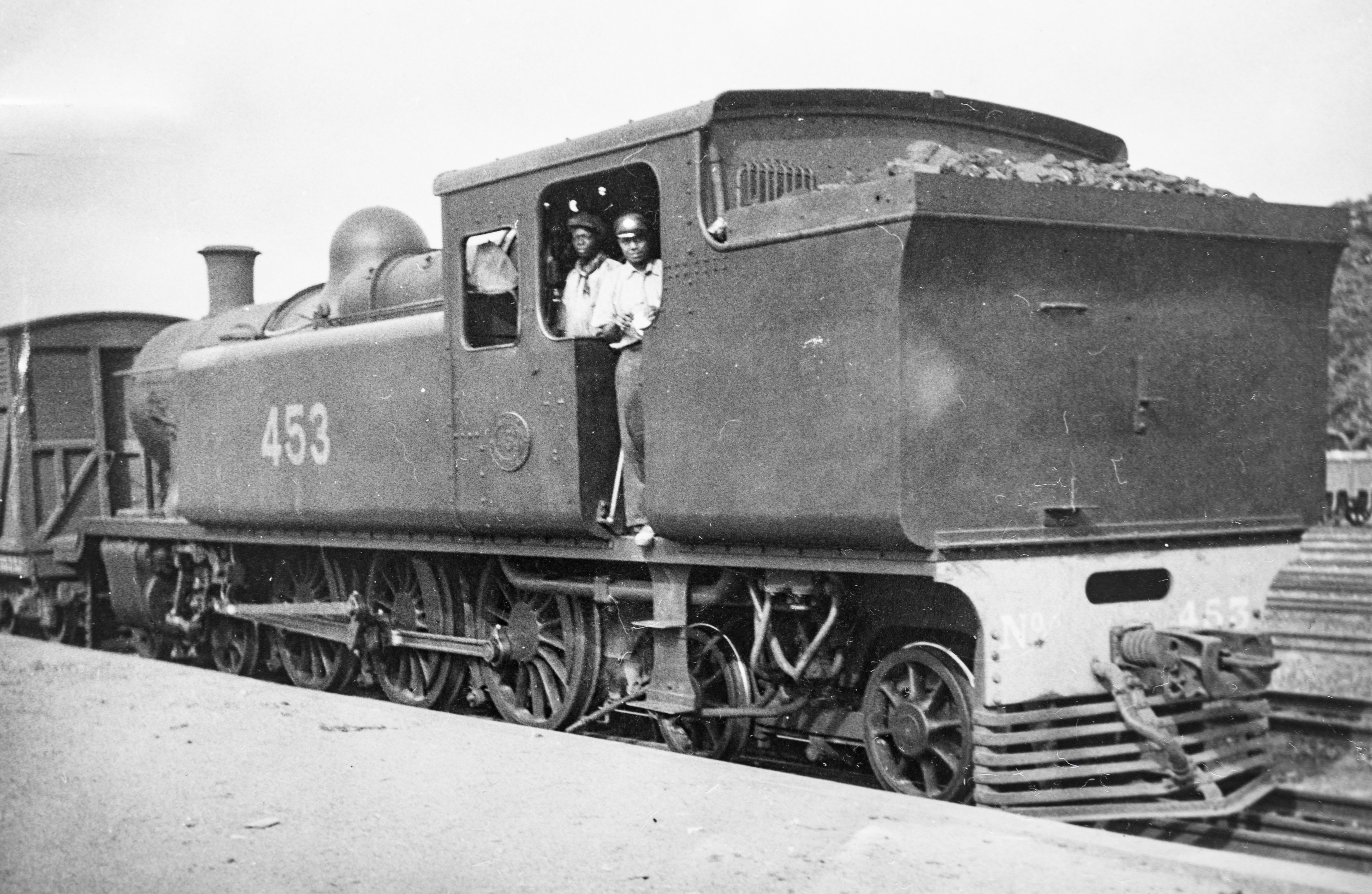
Our train arrived at Enugu early in the morning, and several people came to meet us. One railway man gave us breakfast and lunch, and we soon settled into our house. There was no one to take over from, as the engineer had been invalided home two weeks previously. We had stayed in our house on local leave three years before. It was a pleasant house and had very good store rooms, most useful because we seemed to collect such a lot of things as we go through life. I envy people who keep only the things that they use, unlike ourselves, who keep everything that might come in useful. But each time I threw away anything that had been cluttering up my boxes for years, my husband would want it the next day, so what can you do?
I got some very good agate beads from a trader once in exchange for a pair of my husband's white flannel trousers. He had not worn them for years, as he had stopped playing tennis. A few days afterward, he was ransacking all his boxes looking for them (to wear to a fancy dress party). After a while, I screwed up my courage and admitted the crime. It took me a long time to live it down. Afterwards, whenever he mislaid anything, he would ask me if I had had any business transactions with a native trader. I can always get square with him though, by reminding him of the time he was tidying up papers that had accumulated and he threw away a bundle of English pound notes that we had been collecting for some months.
Enugu is a very pleasant place if you have friends; we were lucky, we found a lot of people we knew there. However, it is very cliquey. People are afraid to smile at strangers, in case they are not the right kind of people.
I remember once hearing a man from the Northern Province saying, "The crowd they get in Southern Nigeria nowadays is getting quite respectable; you can almost ask them to dinner!"
It is very amusing to us to see them looking down on each other. Those who work in the north think it is very degrading to be posted to the south, and vice versa. It is as it should be, and it makes for contentment. I prefer the climate of the south and the natives of the north, although I think I would rather have southern boys as servants; they are more adaptable to our life on the coach.
The Golf Course at Enugu is very pretty. On one side, there is a forestry plantation and hills so close and so steep that the sun sets nearly half an hour earlier than it should. On the other side, there are houses for the senior government officials, all with attractive gardens sloping down to the golf course. The first tee is rather trying for newcomers who have (like me) stage fright. It is too public, and there are always people waiting for their partners or opponents.
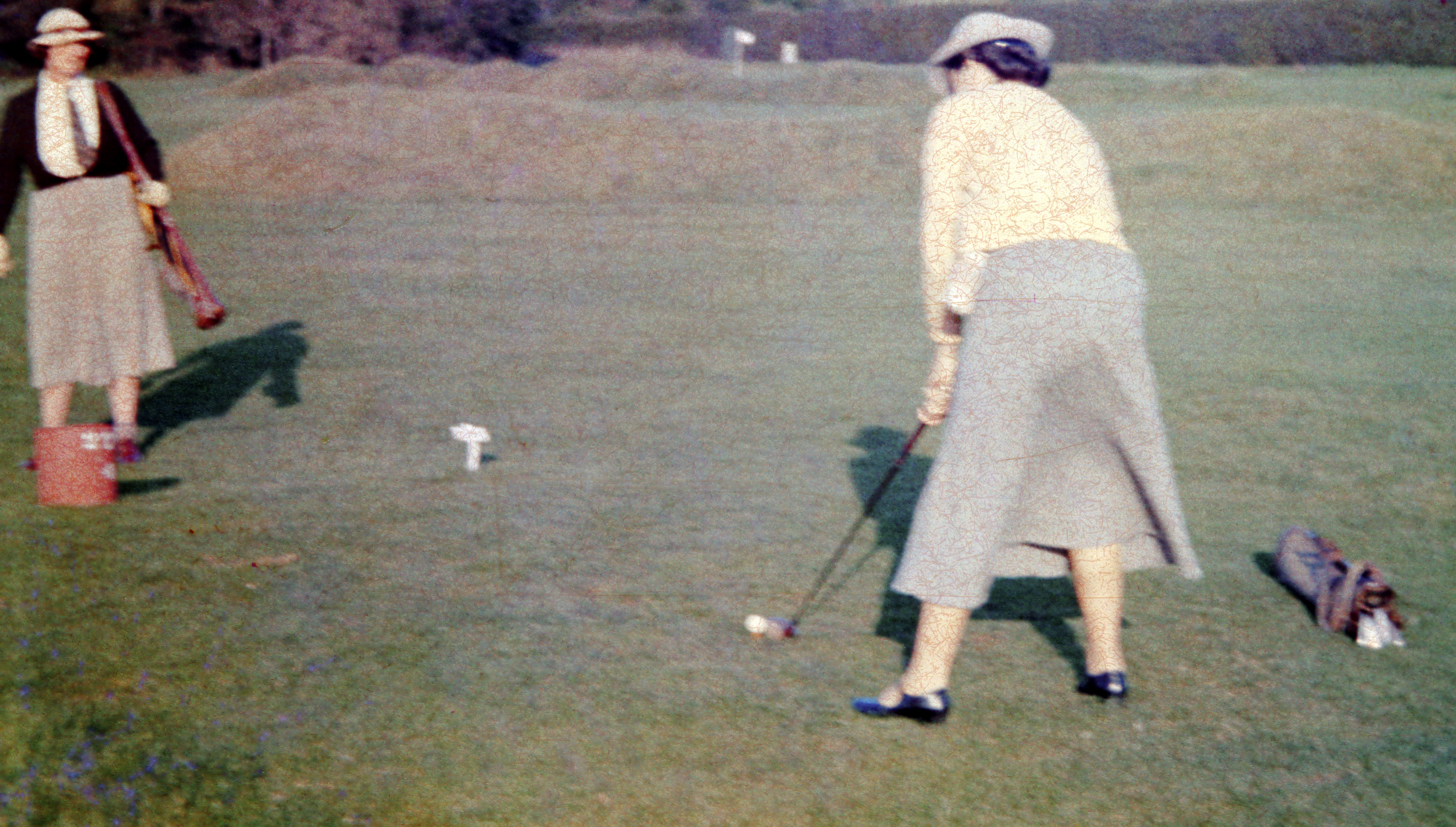
The first time I went to play was with my husband. The lieutenant governor and another man were standing by the first tee when we arrived. He said we might play on. I thought it was very gracious of him to be so courteous to a woman, as they were there first. I thought I should reward him by displaying one of my perfect drives; I can pull off one occasionally and talk and dream about it for a long time afterward. I got on the tee, put down a brand new ball, and gave it a mighty swipe. It was a perfect swing; I don't think that Bob Jones, Harry Vardon, or Miss Morgan could find anything wrong with it. But oh horror, the ball, for some extraordinary reason, rolled down off the tee a yard away from where I was standing. I even forgot to thank them for letting us play through. I hacked the beastly ball about eleven times before we got out of their sight. I need not have felt under such an obligation; they were waiting for another two, as they were playing a foursome that afternoon.
The Enugu club is the best I have seen in this country after the Lagos clubs. It is a large, cool building with two billiard tables, dressing rooms, and a big lounge that they use for dancing. There is a very good cook, and one can buy food at the cold store and have it cooked by the cook for a very small charge. This is very useful to bachelors. They can come in, have a game of snooker and a drink, and then have their dinner. After eating, they spend an hour or so chatting in the cool breeze which always seems to blow there. This is much preferable to sitting by themselves in their own quarters waiting for bedtime.
I hope the clubs of all bigger stations will endeavour to arrange something like that. It is not so difficult if there is somebody who will take an interest in it. It is really more a woman's job; we can do it so much more easily, as we have more time out here than the men do, and I think it is our duty to make this country a better place for the men who work in it.
In several stations I have been in, we women used to arrange cold suppers at the club at regular intervals, and in most cases, they were a success. Occasionally, there was a little trouble about who would do the catering, but in the end, it was settled between us, and we all did something to contribute to a successful evening. It always works better if the senior lady of the station takes an interest. And I think a senior lady should undertake this task of making the station congenial and not only sit on the host's right at dinner parties. They have more time, as they are able to employ better boys (they can afford to pay them better, and also the boys are keener to keep a job with a senior man because of the prestige they get in that position). The boys are much more snobbish than the masters out here and will put up with a lot of roughness from a big "Bambaturi" rather than they will from a junior, even if they receive the same pay.
I must say I have met more wives of the senior men of the station who did their share socially than those who did not. In cases when they did keep aloof, it was because they had a weak personality and they were afraid that someone might get familiar with them. There is no need to be afraid of the expense of entertaining; when the programme of the evening is arranged thoughtfully and people have something to do and something to eat, they drink very little. If the evening is at the club, those who want to spend the kind of evening that leaves behind a headache the next day can buy their own drinks. I have hosted, and have been to, many jolly parties that were well arranged and where very little alcohol was drunk. I also have been to parties at other people's houses, where each man drank a bottle of whisky without getting any fun out of it but just became morose or quarrelsome.
I am glad to say that there are more women out here now who pull their weight and will make strangers and people who don't count feel comfortable and at home than women who do not. But I suppose it is only human and always was. Only it is more pronounced out here, as there are so few of us, and we are all thrown together in small handfuls, whether we have the same interests in life or not. We have to live together, sometimes within sight and hearing of each other, for eighteen months at a time, in a country where the climate and the monotony of life make us jumpy and intolerant.
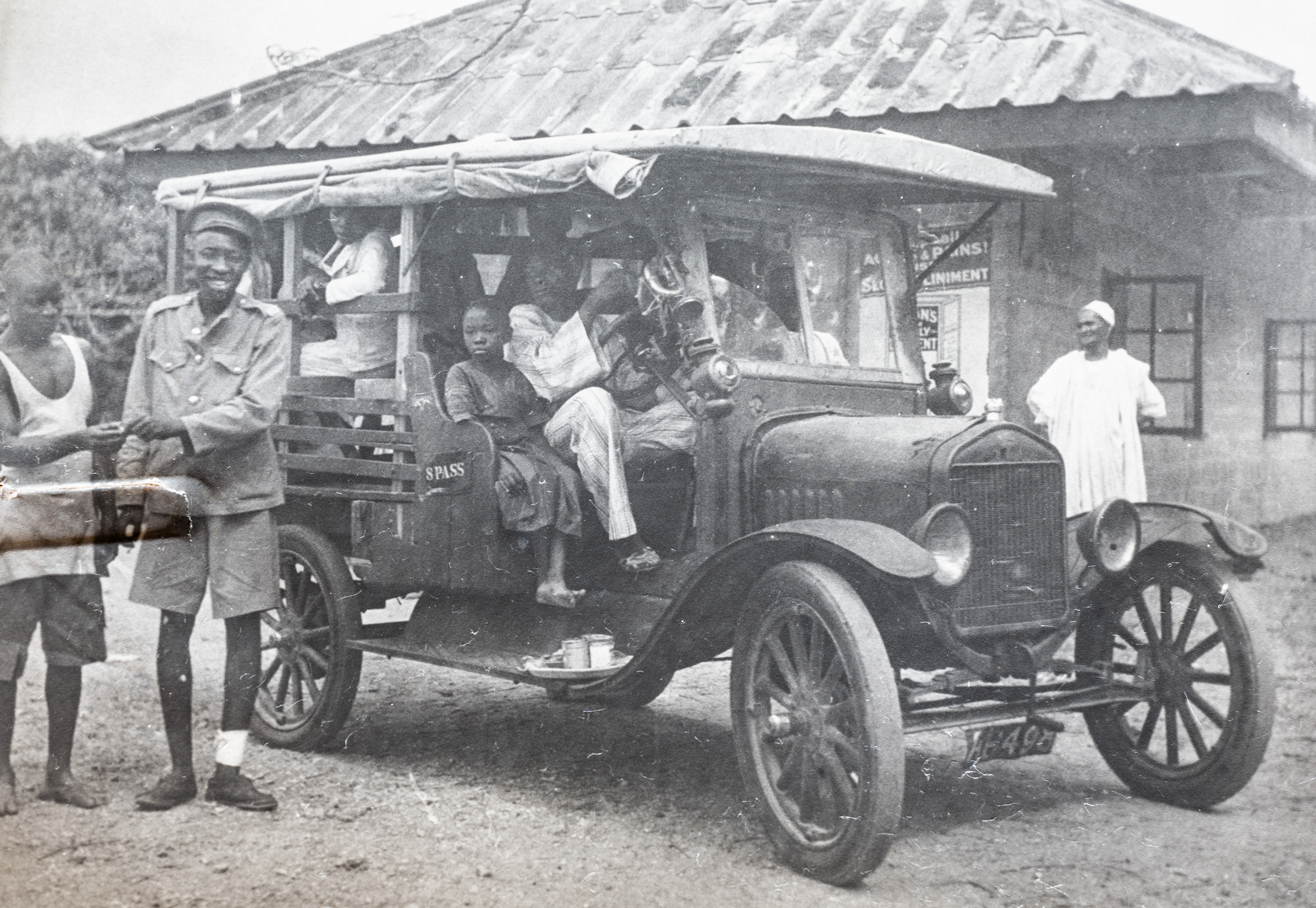
There are very pretty rides round Enugu, and we often went out in our little snub-nosed Morris two-seater car. I was anxious to learn to drive, as there were morning bridge and sewing parties to which I was invited, and I had to depend on somebody giving me a lift. One Sunday morning, we went out for a driving lesson, and my husband was very pleased with my first attempt. Then, one Monday, he got a bad attack of sciatica, and I had to get the car out and go to the shops and other places on my own. I was nervous at first but got more confidence every time I went out. One evening, I went to the golf course, and as I came into the car park, I put my foot on the accelerator instead of the brake. The result was that I nearly ran into the car in front and only saved myself by pulling hard on the hand brake. I nearly shot through the windscreen, and my small boy (who was in the back seat) landed on my neck. When I arrived at the first tee, I saw a few anxious people there who asked me if I was all right.
I said, "Yes, thank you, why not?"
They told my husband afterward that our little old Morris had very powerful brakes and advised him to keep them in that condition.
There was no speedometer on the car, and I always went the same speed, about twenty-five miles an hour, whether on the straight or round corners. If anyone saw me on the road, they used to pull into the nearest compound till I was past; it was the instinct of self-preservation that made them do so. I did not think I was driving dangerously until one day I skidded round a corner and went into a ditch. Luckily, it was a very easy ditch to get out of, and as the car had remained upright, I got some passing natives to push it out and came home very cautiously; after that lucky escape, I was very careful when driving round corners.
Enugu is noted for bad storms. I had been in terrific thunderstorms there when one heard the lightning hissing like snakes and deafening thunder. All electric lights and telephones used to stop working. We were there at the beginning of the rainy season when the storms are the worst.
One afternoon, the water came through our compound like a river and flooded the ground floor of our house, which is built on a little slope. We had a friend staying with us at the time, and she and I were enjoying an unusually cool afternoon siesta in the bedroom. As the rain cools the air, one can simply snuggle under a sheet and sleep. There was a knock on the door, and my husband told me that there was a washout on the line and that he had to go to it, and that I had better go and open the storeroom and let the boys get the water out of it. He said he had been busy all the afternoon, with the boys, moving everything out of the dining room downstairs, as the water was running through it about a foot deep. When I went down, I found the water had nearly gone and the boys were doing their best with the last of it. I had a dinner party that night, and I was praying that the floods would be over by the time my guests arrived. I had nine people coming, and I had told the cook to kill two of my ducks for dinner, but when they brought the dish in, there was only one duck.
So I told them to bring the other one, but the boy said, "We no fit to catch him, he done go for top of house!"
Evidently, the poor duck was enjoying the rain and did not see why it should be interrupted, and the boys never thought of telling me about it.
I can't carve and my husband was away at the washout and so one of my guests helped out. The guests laughed about the flighty duck, and of course, nobody asked for a second helping. I dare say some of them thought that I had rehearsed it all with the boys beforehand, like the man who used to call for champagne in order to impress his guests, and his boy always replied,
"Finished yesterday, sah!"
The boys are notorious in this country for letting you down like that.
I often wonder why they come to work for us. Their village life seems very easy. They work a little, then play their tom-toms and sing and drink till they get quite dazed. With us, they have to keep up appearances and, in a lot of cases, never go to bed before midnight. It is the money that attracts them; they love money, though they don't keep it long after pay day. Our cook at Enugu always came to borrow money a week after payday. I was so tired of lending it to him because he never reminded me when he came for his pay on the first of the month. I now pay him twice a month, and that saves keeping accounts. In all these years, I have had only one boy who saved his wages. He was my small boy and was getting only fifteen shillings a month. He managed to put ten shilling into the Post Office savings bank each month. I looked after the book, so I saw that he did put it in. All the others were the borrowing kind.
What they do with the money I don't know, because their food is very cheap. I buy native food and a little meat or fish to feed my poultry, and it costs very little. The sad part about it is that when they come to us as servants, they get out of touch with their village life. Through eating bread and tinned food (as so many of them do), and through drinking and never exerting themselves physically, they lose stamina. When they get old, they become parasites. They live off their friends who have jobs, and they won't go back to the villages because they are too soft to do a day's farming. They have not saved up for their old age, and so they are hangers-on, nuisances, and sometimes mischief-makers, demoralising the younger boys, teaching them to drink and other bad habits.
The Engineer who was invalided home left a cat behind. For a week, we did not know there was a cat. He lived in the culvert outside the house, as the garden boy's dog chased him there, and he was afraid to come out during the day. We heard the meowing every night, but we could not see the cat – it was too frightened to come near us. In the end, we asked the garden boy if he knew anything about this cat. He told us that it had belonged to his master, the previous engineer. So we tried hard for a day or two to get him to come out; we put food and milk at the end of the culvert, and in the end, it got so bold that it came into the house.
It was a most extraordinary creature, very big with a broad chest and long, strong legs; when it walked, it made as much noise as a sergeant major in new boots. After a short time, it learned our dinner hour, which was eight o'clock, when the lights used to be dimmed as a time signal. If we had people for drinks and they did not go before eight o'clock, the cat used to get quite impatient; he used to walk round the chairs, stamp his feet; you could almost hear him using impolite language. The guests would look at the clock and get up and go. When we went on the coach, we wanted to take the cat with us because I knew that the garden boy would not feed him. We put him in a box and nailed slats on the top. He did not like being imprisoned and knocked the slats out and escaped before we departed. We had no choice but to leave him with the garden boy for a fortnight. I provided some milk and money for fish and meat, but when we came back, the cat looked very thin, and the garden boy bulged. He didn't believe in wasting good food on animals.
The Enugu section of railway lines was as bad as Enugu station was good. There was not one other station where we liked to stay. We had a small coach, hot and compact. None of the natives on the whole two-hundred-mile section were pleasant. We used to start from Otampa. It is a pretty, hilly place, but the natives are all scallywags, a surly-looking lot. I did not enjoy meeting them on my walks in the bush, though I suppose they were harmless. My husband taught me a jiu-jitsu trick on our first tour, in case of an emergency, as I walked miles by myself in the bush or along the railway line when he was trolleying. I hope I shall never have to use it.
One day, I was walking along a bush path a couple of miles away from Otampa, and I saw two natives walking towards me. They carried guns, spears, and daggers and wore only loin cloths. It was a very misty morning, and they were only a few yards away before I saw them. I put my umbrella down and pretended I was tying my shoe lace. I was watching their movements by their feet and was ready for them.
When they saw me, they said, "Good morning, Ma!"
and I felt such a fool getting excited over nothing. They were two of the station staff coming back from shooting "beef."
Otampa is at the end of the Port Harcourt section and only about five miles from Ovim, where we used to stay in a rest house. The missionary who was at Ovim has now retired, but we knew the man who replaced him – he had come out on the boat with us. One evening, we decided to walk to Ovim and visit the mission and the rest house. It is five miles by railway, but we were told that it was only three miles if we took a short cut by the bush path. We asked our boys if any of them knew the short way to Ovim; one trolley boy said he knew it, so we told him to lead us to Ovim.
We started at four pm so that we could have a couple of hours to spend with the missionary before starting back. We walked on and on, and when it got dark, we still were not getting anywhere. I should say we covered about fifteen miles because we were walking fast all the time. We got to Ovim at about eight pm and found that the Missionary was on a trek, so we did not even have a drink of water before we started walking back to Otampa. We came back along the railway line and were home and had dinner by nine thirty. This is another example of the natives not being able to admit they don't know. I never take a short cut now unless I have verified for myself that it really is a short cut. Even the educated Africans will suggest that a walk is one mile, and it usually turns out to be about three.
Another unpleasant station where we had to stay is Afikpo Road. Near the siding where we put our coach, there was a rest house, which was once a railway house but is now a political rest house. I never saw anyone staying in it, but the natives used to have a market there in the compound, and the caretaker had a gramophone which he played all day and all night. Once, my husband went on a bright moonlight night at four in the morning to tell him to stop, but the noise resumed the following night. There were some old railway houses about half a mile away from the station. There had been a railway reservation there in past days with loco workshops, with a foreman in charge and some European drivers. But it had been closed down, and the houses were empty, except for one that was occupied by a native who had bought the house.
There was another station where we sometimes stayed. I can't remember the name of it, but there were always a lot of pigs wallowing in the mud just outside the coach, and they made champing and grunting noises all day long. Ogbaho was another station quite close to Enugu where we occasionally stayed. The natives there were not nice to meet in the bush; they put me in mind of the young Lieutenant who was sent to investigate the manners and customs of some natives on one of the South Sea Islands. He wired his report: "Manners none, customs beastly." The boys were very scared at Ogbaho, and after dark, would not go anywhere by themselves, not even from the siding where the coach was to the station. When I went for a walk, they implored me not to go far. The station master said the same thing; so at Ogbaho, I used to walk along the railway line.
Igumale was the best place to stay at. There was a mission school not far from the station, and I used to spend a day with the missionary's wife. Igumale was another deserted place. There were several empty railway houses, but only two European foreman platelayers lived there. One of them did some very good pen and ink drawings. I am always glad to see men with hobbies because some of them have a lonely time in the bush with nobody to talk to except their servants. The other one was studying mathematics, and my husband gave him some books and used to help him when we went there once a month or so. They were both sound fellows.
After we had been five months at Enugu, my husband was transferred to Makurdi. The engineer who had been at Enugu had recovered and was returning. I was very sorry to leave. We had become settled, made friends, and my garden was just beginning to look as it should after I had spent a lot of time and money on extra labour and seeds. We packed up and departed. It is only a hundred and thirty miles from Enugu to Makurdi, and we went in the coach. I was feeling very miserable about leaving all my women friends who had made me very happy at Enugu. In some stations, you can stay for months without speaking to or seeing a woman. It didn't help that I had hurt my arm when our driver had jerked the train at one station.
What I had heard of Makurdi was not very encouraging, and so we were prepared for the worst. When we got there, we were met by the engineer that my husband was relieving, and he told us that his wife was expecting us to dinner. We had not met them before. They were due to go home on leave in a fortnight. I had two baskets of chickens and ducks, and as we were to stay in the coach before the engineer and his wife left, I asked him if they would let me put my poultry into their poultry house. He was a very fussy man and did not like chickens in the compound, as he thought they encouraged snakes. However, as he was a kind man, he told his boys to take the chickens and ducks and put them in the compound. They were very hospitable people and often invited us up to the house in the evenings, but it was very trying staying in the coach for two weeks when we only expected to be in it for one day. Everything was getting spoiled in the hot coach: all my stores and the plants that I had brought in tubs.
Though we liked the people, we were very glad to see them go and to be able to move into the house and unpack. The house at Makurdi is very good, the best engineer's house that I have lived in. The only drawback is that there is no spare bedroom. There were plenty of rest houses, though, and the resident was always willing to lend one to us for our guests.
There were about thirty Europeans at Makurdi, and ten of them were wives. The club had a refrigerator, two tennis courts, and a nine-hole golf course. It used to be a very prosperous club when Sir William Arrol's people were building the bridge over the Benue river. It was rumoured to have cost a million pounds, and Nigeria is justifiably proud of it.
When we had moved into the house and made acquaintance with our neighbours, we felt much more cheerful. The people were exceptionally nice, and the atmosphere was friendly. To sit at the club and watch the sunset over the islands in the river was a special joy. Nowhere else in Nigeria have I seen such wonderful sunsets as I saw over the river at Makurdi. The station is built on a hill, in a half-circle following a bend in the river, so that every house has a lovely view. I used to watch the sun rise from my bed on Sunday mornings; on weekdays, I was out for a walk or gardening at that time.
My husband made some sails and fixed them to the boat that was kept for the bridge inspection, and we went out sailing. It was a very precarious pastime, and every time we came home, I thanked providence for our preservation and promised myself not to go again. As soon as my husband got the sails out on the next occasion, I was like a spaniel when his master gets a gun out. I could not keep away, and I would go with him. Once or twice, we persuaded people to come with us, but except for one man who used to be in the navy, none of them came again. I didn't blame them, as there were a lot of anxious moments every time we went out. I think they thought we were mad: going out in a little boat in a river up to a mile wide, where moving sand banks, rocks, fast currents, and uncertain breezes made sailing dangerous. Many times we were stuck on one of the islands that change their position every year and, until the river goes down low, are not easily seen. Sometimes we were caught in a current when there was no breeze to get us away, and we were carried down over dangerous rocks. Fortunately, we always managed to miss them. I used to get so scared that I shut my eyes and waited till we had passed some very bad place. When I opened them, I might see some queer bird sitting on a nasty sharp rock that we had just missed. But I thought all trouble and fright was paid for on those occasions when we caught a good breeze and our boat cut through the rushing water, and the wooded banks and native fishing villages streamed past us.
Sometimes we were caught in a wind storm and got blown away to the other side of the river and had to walk back a few miles through the bush in the dark. Once, when we got to the bridge, the wind dropped, and as I wanted some exercise, I took the oars while my husband had the rudder. I was sitting with my back to him. Suddenly, the boat rocked dangerously, and we heard loud scratching noises underneath. I told my husband that I did not like it and that he must be careful how he moved.
He quietly said, "All right."
When we had reached the bank and tied the boat up, he told me that we had gone over a crocodile, which caused all the rocking and the scratching. It was fun, but I thought that when we went back to Makurdi, I would give up the far too exciting pastime of sailing on the river Benue.
There were many cormorants and other river birds that we could not identify on the little islands and rocks in the middle of the river. Fish, chiefly fat-bodied Giwan Rua, used to take a terrific leap in the air and come down with a vigorous smack on the water. Giwan Rua could weigh as much as a grown man.
That year, just before Christmas, my in-laws sent us a letter and some newspaper cuttings about Helen's school. The school cook had told the two old ladies who ran the school that she had heard from some lawyers in America. Her husband, who had deserted her eighteen years ago, had died and left her twenty thousand pounds (£1.5 million in 2025). She would like to invest in the school, enlarging it and improving it in every way. The two sisters were very pleased and bought the two houses next to theirs, did some alterations and improvements, and generally let themselves go. The cook, meanwhile, no longer stayed in the kitchen but spent the time interviewing parents and generally acting the grand lady, while her daughter, who had helped her in the kitchen, became a boarder. Helen says she was a nice child. When the builders and decorators started to press for payment, the cook said they must wait till her estate was finally settled. They got tired of waiting and went to court. The police got busy and found out that the cook was spending the money that she had been loaned to pay the tradesmen's weekly bills to keep up appearances while she was acting as the heiress to a fortune. She was a well-known fraud and was arrested, tried, and sent to prison.
The girls were very sorry for the child, whom they liked. The school couldn't survive, and we had to look for another whilst out in Nigeria. A lady at a sewing party told me that the school she attended was still very successful and that she was very happy there. She gave me the address, and we wrote to my in-laws asking them to go and see it. They visited and liked it, so Helen was taken there after Christmas, and she is still there and is very happy. She has not won any prizes yet, but it may be our own fault.
Europeans in Nigeria cannot take children with them because the climate and the surroundings are unsuitable. To make up for our desertion, we usually allow them too much freedom and pocket money and make their life as easy and protected as we can. When we go home on leave after eighteen months of a monotonous and often very trying life, we just can't be bothered to correct our children and talk to them like a Dutch uncle about their school reports. It would be mean to do that, considering that we spend so little time with them. The children assume that their parents have a very easy and happy life, with plenty of money, and they don't see why they should always do the things that are good for them, preferring to please themselves.
The policy of most schools is to concentrate on a few studious children and from them get results that will bring credit to the school. The majority, who need to be pushed, only have sufficient attention given to them to enable them to pass from one grade to another.
When Helen went there first, one of the girls asked her what her father did, and she said, "He is an Engineer in West Africa."
The other girl said, "Oh, Engineers are nobody; my father is the governor of the whole of Africa!"
Helen was very much impressed and asked us if she knew the father, but I am afraid we have never heard of him. He is probably a D.C. somewhere in Gambia (if there is such a post).
The fourteen months in Makurdi passed very quickly. The section has many pleasant stations. We started from Oturkpo, a pretty reservation where the district officer of the Idoma division and his assistant live. I believe the Idoma people are not friendly, but within my radius of walking, they were more or less civilised and not unpleasant.
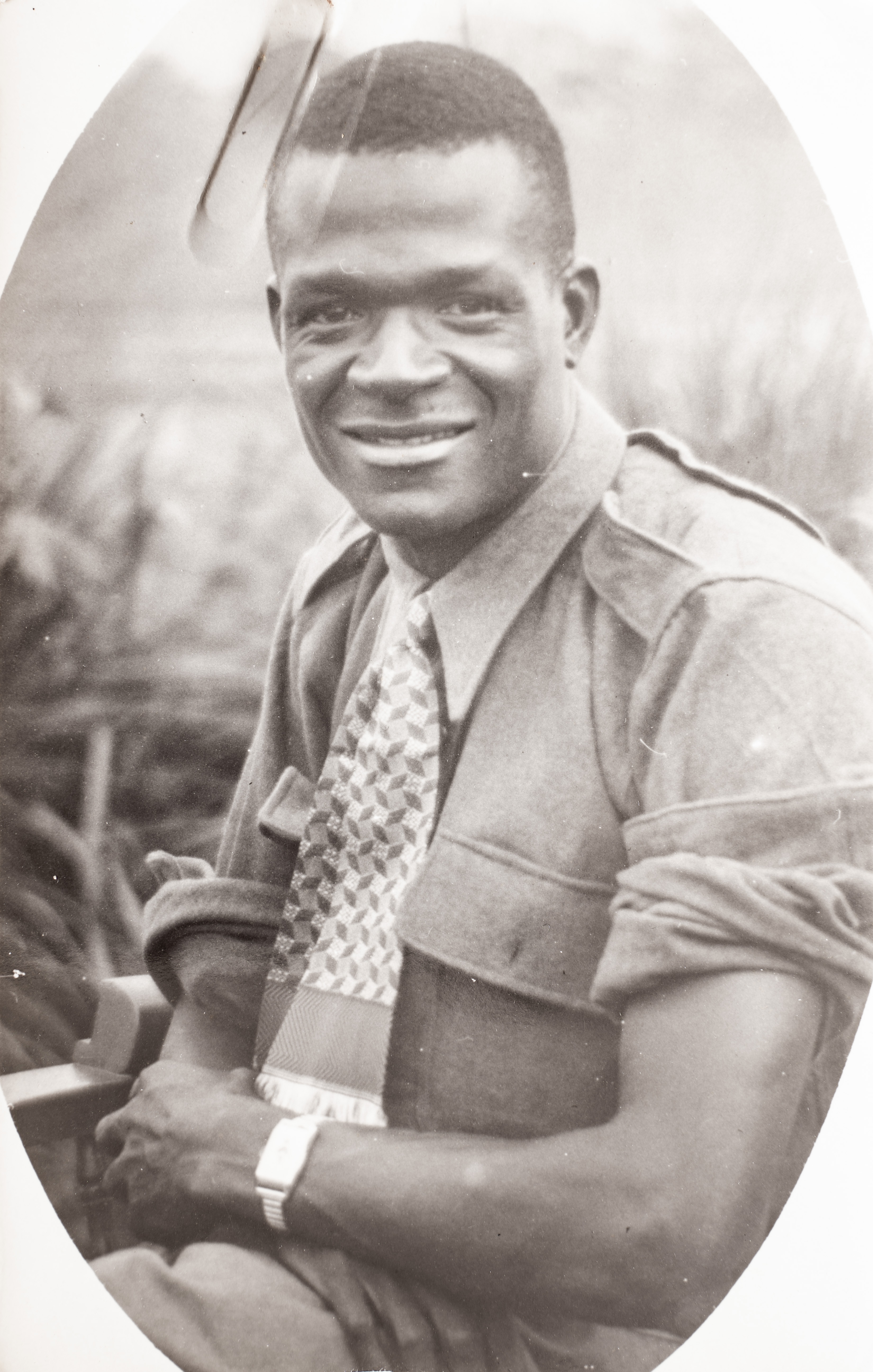
The African station master at one station was a very keen photographer. He was a nice man, and we gave him a lot of photographic supplies. After that, he always took our photographs every time we visited. He took us from all distances and angles. He liked best to take a very close-up photo of our faces and then enlarge it. My tropical complexion would come out like an orange, most unflattering. He tried to photograph the local people, but they would not stop unless he paid them a penny. Our photographers back at home would not flourish if people took the same attitude.
On the Northern side of Makurdi was Lafia. We liked staying there. There is open country all round, and the natives are pleasant. There was a small European community, including a district officer and four missionaries. We spent many pleasant evenings there; either the D.O. came to the coach, or we went to his house. The missionaries were a charming and most interesting couple; the man has been in Africa nearly forty years, his wife nearly thirty. They worked among the pagans in the north, and they told us many interesting tales of their early experiences in northern Nigeria. The wife (Mrs. M) was a medical missionary and used to trek from village to village, doing all she could to help the sick: dressing sores, pulling out teeth, and so on.
Outside one village, she found an old blind man suffering from yaws, covered all over with sores. He was in a tumbledown old hut, and the villagers used to bring him food secretly at night because he was an ex-chief. His brother had become chief after the old man had been blinded and was not interested in the old man. So Mrs. M went to the chief and asked him to give her permission to take the old man with her to the mission and have him cured.
The chief said, "No, I don't want him cured! When he is rotten, people don't want him as a chief, but if you cure him, they will have him back, and I will no longer be chief."
Mrs. M could not do anything without the chief's permission, so she had to leave the poor old man to his fate. But when a District Officer came on tour and visited the mission, she told him about the sick old man. The District Officer sent his messengers at once to bring in the old man. When they got to the village, they could not find him. His brother, the chief, had hidden him away and told them he had gone away somewhere else. So the messengers came back without him. But the old man heard them looking for him and listened to the conversation, and when it got dark, he escaped and walked all the way to the mission, stumbling the whole night along the bush paths that he remembered. Mrs. M. gave him injections and cured his sores.
The disease had atrophied the muscles of his eyelids so that he could not open them. His eyes, however, were sound, and if he held up his eyelid with his finger, he could see very well. So Mrs. M. made him a suspender with a piece of elastic which she fixed to his headband, and he was very pleased because then he needed not hold up his eyelids with his fingers. He went back to the village, very proud of this contraption. The natives were pleased to see him come back cured; he was a good man, and they liked him, but they said that they could not have him back as a chief because the disease had eaten away his nose and left a hole in his face. He was very upset and came back to the mission to tell them. So Mrs. M started thinking what she could do for him. She got a piece of tin and shaped it like a nose, covered it with a piece of soft dark leather which matched his skin, and fixed it to his face by tying it with black thread around his ears like a pair of spectacles. Once more, he went to the village to be wondered at and admired, and this time, they decided that he did not offend their aesthetic sensibilities, and they took him back as a chief. I did not hear what happened to his brother.
Mr. & Mrs. M had a house boy that had been with them since he was a child. Early in his life, he had been sick with a skin disease and was thrown out of his village and lived on refuse. Mrs. M cured him, fed him up, and taught him how to keep clean and honest, and now he is their faithful servant.
Many times the missionary's grass houses have been burned, and their canoes have been upset, but they were still cheerful and energetic, doing their difficult task. Their mission is poor, and they get only enough money to buy native food, but their belief in their work keeps them strong and happy. The natives respect them and come to them without hoping to get any profit. The people that came to them were so different from the crowd that comes to work for the railway that they might be from another planet. The former bow politely when they see you and are polite to each other. The crowd that I am used to seeing on the railway are mostly rascals, some cheerful and others not. The only thought in their life is how to get more money and spend it as fast as they can. I hear them talking to each other:
"How are you?"
"I am all right."
"You get five shillings?"
"I no get it, Jacob no pay me nothing last month"
It was a very typical conversation. But occasionally, it was worse, and then I told my boys to move them away out of my hearing. They laughed and moved away.
The Doctor at Lafia was a worry to them all. He was a very likeable man and a clever doctor but temperamentally was not suited to Nigeria. His wife had young children and could not come out with him, and he tried to forget his loneliness in alcohol. In the end, he was hardly ever sober. It was very pathetic to see him crumbling like that because when I met him on his first tour, he was a normal, healthy man. He is not in Nigeria now, I am glad to say: for his sake and his family's sake.
Another place where we used to stay was Mada. Once, it was quite a big local junction, with a European loco foreman and several European drivers, but now the houses are all empty, except for one, which is occupied by a foreman platelayer. Mada is a very good place for big game shooting. Barikin Abdulahi, a few miles away, is, I believe, the best place in Nigeria for big game. The lions used to come into the station at night.
For a distance of ten miles, the country is unpopulated. In the old days, the Mada hill people and the Lafia tribe were afraid of each other and therefore kept a respectful distance, leaving about twelve miles of bush unfarmed and unpopulated between them. The wild animals were undisturbed when we were there. While his house was being rebuilt, the foreman of works lived in an old rest house two miles distant from the station. He shot many wild boar and deer of various kinds, from the small duiker to a big roan, about the size of a pony. I often saw big animals in the distance stalking along, and monkeys and deer were very plentiful. The foreman of works had to put his sheep and chickens into an empty water tank at night, and hyenas, leopards, and lions used to prowl around.
It was uncannily quiet when I went for walks near Barikin Abdulahi. I never met a native unless it was during the working hours of the railway gangs. I loved the peace and the feeling that I had the place to myself. I could understand then the feelings of men who live by themselves in the Arctic or some tropical desert, miles away from another human being, and how they grow to love their solitude and can never again settle near human beings. I was never afraid of wild animals during the day because I know they never attack you unless you wound them; the bush cow (African forest buffalo) is the exception and can be more dangerous than a lion, but as I had never met one, I did not worry too much. My husband had seen bush cows in the distance when he was on the trolley but never close up.
The hyenas were the most annoying; they wail at night, a most horrible noise that sent shivers down my back. I don't know who first called their wail a laugh, as there is nothing in it like a laugh, but it is something between a moan and a shriek. They came around our coach most nights, and we had to shut our cats in the bathroom. Once, my husband woke up because of the strong smell, and when he looked up, there was the head of a Hyena looking through the window of the coach in the bright moonlight. Our coach was against a motor ramp, and so the windows were very near the ground. After a rainy night, we would see big footprints of hyenas and sometimes leopards. There was always something to write home about.
There is a river at Mada, but I cannot name it. I never learnt the names of rivers in Nigeria. The natives don't seem to know them, and I only know the Niger, Benue, and Chandhaga. The river at Mada was very swift and beautiful as it leapt over the rocks. It was a nice walk for me along the river to the railway bridge and back early and late in the day. The hills, about seven miles distant, looked most attractive; I believe the inhabitants of those hills were not so attractive, nor were the ticks at Mada at all attractive; they were everywhere and most unpleasant; when we went for walks, we had to bend down every two or three minutes to pick off the ticks that were crawling up our legs.
One place where we liked to stay was Kogum River station. It was quiet and pretty, with pleasant walks. During the Harmattan season, it used to get very cold at night. When we went there for the first time, I had not taken enough blankets, so when we went to bed, we had to put on all the warm clothes that we had in the coach. Our boys were worse off than we were; their boxes of belongings were in the guard's van, and when the coach was uncoupled and left at Kogum River station, the train whistled and went on with all our boys' boxes. The funny part about it was that they did not notice until it was time for them to go to bed; they just thought that one of them had got the boxes off the train. They came at night, shivering with cold, to tell us the sad story. We had just received our mail, and we had a big bundle of Morning Post newspapers. I gave them the lot.
They told us the next morning that, "Them papers be plenty big and plenty warm!"
Five miles away was Jiginde, at the foot of the mountains, and the end of my husband's section. Guinea fowl were plentiful, and they were so tame that if you shot one, the rest would just lift their heads and then continue to feed. I often wish I could be a vegetarian, but the variety of food out here is so limited that one cannot keep well without meat.
Makurdi was very good for fish, meat, and poultry; ducks were plentiful and cheap. At Lafia, pigeons and turkeys were good value, and I always brought some with me to Makurdi. Thus, providing food at Makurdi was very easy, and my housekeeping money went far, even though we often had people for meals. We kept very fit, and at the end of the nineteen-and-a-half-month tour, we were in quite good form.
The resident and his wife were very well liked and respected by the whole station, and the social life there was very pleasant, and this adds much to our well-being in Nigeria. We had no culture of any sort: no theatres, cinemas, or concerts. They exist only in our recollections from previous leave or in reviews we read in the newspapers.
The evenings are long. In the tropics, darkness falls between 6.30 pm and 7.30 pm all year round, and then come long dark hours with mosquitoes, sausage flies, moths, and other insects stinging and getting into your eyes, nose, and soup. Time must be whiled away somehow. If it is passed in congenial company, one forgets the nag of those unpleasant worries which we all have: bad news in the kitchen (cook trod on a pudding) or perhaps an official raspberry from headquarters. Very few of us want to be alone, and the friendlier the station, the brighter the outlook.